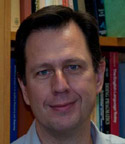
The Faces of PhilSoc: Karen Corrigan

karen_corrigan


Name: Karen Corrigan

Position: Professor of Linguistics and English Language

Institution: Newcastle University

Role in PhilSoc: Council Member


About You

How did you become a linguist – was there a decisive event, or was it a gradual development?

Even as a child I was fascinated by all things linguistic. I grew up in Northern Ireland at the height of The Troubles and the arrival of the British Army was my first exposure to accents and dialects that were not native to the region since Northern Ireland back then was synonymous with emigration rather than immigration. My younger sister and me – despite being teenagers – didn’t get out much on account of the security situation and used to entertain ourselves confined to quarters by challenging each other to mimic the English and Scottish accents we had begun to hear around us. I suppose that was our way of trying to make light of the threat which the army represented in our lives. When I went to University as an undergraduate, opting for English, Irish and Linguistics was thus a no-brainer for me.

What was the topic of your doctoral thesis? Do you still believe in your conclusions?

“The Syntax of South Armagh English in its Socio-Historical Perspective.” Amongst my conclusions, were the ideas that:

  1. Irish English needed to be investigated from a contact linguistic perspective since it did after all develop from the L2 acquisition of English on a massive scale by L1 speakers of Irish;
  2. Taking a mixed Sociolinguistic and Biolinguistic approach to syntactic variation and change can be more illuminating than viewing it through a single lens.

I still believe in both of these conclusions and the latter, in particular, has become associated with a new sub-discipline in linguistics known as ‘Socio-Syntax’ which I have continued to work in since and which is being further supported by the research of other scholars too.

On what project / topic are you currently working?

Research on language in Northern Ireland (including my own prior to 2014) tends to focus on the varieties spoken by the major ethnicities. Their linguistic heritages have been hotly disputed and scholarship reflects the socio-political conflict of ‘The Troubles’. The Peace Process has ensured greater protection for Irish and Ulster Scots and has also made the region more attractive, resulting in unprecedented immigration. New ethnicities have become increasingly visible and audible. The project I am currently investigating was supported by an AHRC Research Leadership Fellowship and explores these connected communities in the light of historical emigration.
The project addresses the following issues arising from these inward and outward migratory trends:

  1. How can a cross-disciplinary approach to migration and language contribute to our knowledge of the ways in which socially meaningful spaces are constructed by human agents?
  2. How do speakers make use of linguistic variation to express local belonging and/or dissonance therefore developing, and displaying to each other, ‘a sense of place’ (Convery, Corsane and Davis 2012)?
    In other words:

    • Do ethnic minorities maintain their community languages to assert social distance?
    • What are the constraints on linguistic variation amongst indigenous young people?
    • Are new inward migrants acquiring the same constraints as their local peers?
    • Are there differences between the constraints discernible amongst the Northern Irish English varieties used by newer and older minority ethnic groups?
  3. Do diverse NI social groups hold similar or different attitudes towards minority and regional languages and their speakers?
  4. To what extent are the migratory experiences of the Irish Diaspora and inward migrants to NI similar and can historical records of emigration by the majority ethnic groups be used to promote tolerance towards ethnic minority communities now living in NI?
  5. What ‘best practice’ educational support is there for regional and minority languages in NI?

What directions in the future do you see your research taking?

I will continue to work on language and dialect issues in Ireland alongside keeping up my interests in the ‘Diachronic Electronic Corpus of Tyneside English‘ project which I have been developing there since joining Newcastle University in the 1990s.

How did you get involved with the Philological Society?

I became a member of the society though communications with Prof. Keith Brown, former Honorary Secretary for Publications of the Society, who I first met as an undergraduate. Keith was the external examiner of our Linguistics programme at University College, Dublin and the practice there was to have a viva with the external as part of the examination process from the First Year onwards.


‘Personal’ Questions

Do you have a favourite language – and if so, why?

It has to be Irish because it is a minority language and could do with the support!

Minimalism or LFG?

Minimalism but with a Sociolinguistic twist.

Teaching or Research?

I have to say I really enjoy both.

Do you have a linguistic pet peeve?

Approaches to contact varieties that do not consider Mufwene’s wonderful ‘Founder Principle’

What’s your (main) guilty pleasure?

Chocolate.


Looking to the Future

Is there something that you would like to change in academia / HE?

I think HE should be free to all.

(How) Do you manage to have a reasonable work-life balance?

If I am honest, I’m afraid that I don’t …

What is your prime tip for younger colleagues?

Learn to be collaborative and collegiate.

The Morphological-to-Analytic Causative Continuum in Hausa: New Insights and Analyses in a Typological Perspective

by Philip J. Jaggar (School of Oriental and African Studies, University of London)

Over the last few decades, linguists have devoted considerable attention to both homogeneity and variation in the expression of causal events across languages. However, most studies, whether typological or language-specific, have focused on the category of morphologically overt (e.g., ‘lie/lay X down’) causatives, to the relative neglect of complex periphrastic (e.g., ‘get X to lie down’) formations.

The present study addresses this imbalance by elucidating a wide spectrum of causative expressions in Hausa (Chadic/Afroasiatic), supported by a strong cross-linguistic perspective. In line with contemporary approaches located within a general typology of causation, the analysis invokes the widely-accepted dichotomy between direct and indirect causative constructions. Direct causation associates with morphological causatives, indirect causation with periphrastic expressions—compare morphological ‘I lay X down’ (direct, with no intermediary) with periphrastic ‘I got X to lie down’ (indirect, where X also functions as an intervening actor/cause).

Hausa uses an indirect periphrastic causative usually formed with sâa ‘cause’ (lit. ‘put’) as the higher causal verb, e.g., nâs taa sâa yaaròn yaa kwântaa ‘the nurse got the boy to lie down’ (= intransitive kwântaa ‘lie down’). Direct morphological causatives, in contrast, associate with a specific derivational formation, known as “Grade 5” (Parsons 1960/61), e.g., nâs zaa tà kwantar̃ dà yaaròn ‘the nurse will lay the boy down’.

The monograph systematically explores, for the first time in an African language to our knowledge, the key design-features that distinguish the two mechanisms, in addition to demonstrating that Hausa periphrastic causatives can also differ from each other, e.g., in implicational strength, depending on the modal (TAM) properties of the lower clause. In so doing, it provides a rare account of how the two types are used to describe pragmatically different causal events and participant roles.


Jaggar, Philip J. (2017) The Morphological-to-Analytic Causative Continuum in Hausa: New Insights and Analyses in a Typological Perspective. (Abhandlungen für die Kunde des Morgenlandes, Band 109). Wiesbaden: Harrassowitz.
Available from 1 June 2017.

TPS 115(2) – Abstract 5

The Sanskrit (Pseudo-)Periphrastic Future

by John Lowe (University of Oxford)

The paradigmatic status of the Sanskrit periphrastic future is widely taken for granted. I argue that all the criteria for distinguishing the periphrastic future as a paradigmatic tense formation from a syntactic collocation of agent noun plus copula are problematic, except in one small set of Sanskrit texts. The evidence requires a nuanced diachronic approach: in early Vedic Prose we may reasonably speak of a paradigmatic ‘periphrastic future’ (though it may not be periphrastic), but outside this period the formation is merely a special use of the agent noun.

DOI: 10.1111/1467-968X.12102

TPS 115(2) – Abstract 4

The ‘fiver’: Germanic ‘finger’, Balto-Slavic de-numeral adjectives in *-ero- and their Indo-European background

by Marek Majer (Harvard University)

Proto-Germanic *fingraz ‘finger’ – long connected to PIE *penkʷe ‘5’, but without a convincing derivational scenario – can be interpreted as *pēnkʷ‑ró‑, a genitival R(V̄)‑ó‑ vr̥ddhi derivative to *penkʷerom ‘set of 5’. This latter form is the substantivization of *penkʷero‑ ‘5‑fold, counting 5’ – a form belonging to a series of de-numeral adjectives which, it is argued, is the single type underlying the Baltic pluralia tantum numerals (Lith. penkerì ‘5.pl.tant’) and the Slavic collectives and distributives (PSl. *pętero ‘group of 5’, *pęterъ ‘5‑fold’).
It is further hypothesized that (Post-)PIE forms like *penkʷero‑, *sweḱsero‑, *septm̥mero‑ need not rest upon false segmentation of a thematic derivative of ‘4’ (*kʷetwer‑o-), as is most commonly assumed; rather, they can be explained as simple thematic derivatives of an *‑er locative of the type *penkʷer ‘in/on/at 5’ = ‘in a group of 5’ (a close parallel of this semantic relationship is provided by Lith. trisè ‘3.loc’ = ‘in a group of 3’, or even by French à trois). The posited type *penkʷer also yields a back-formed substantive *penkʷōr ‘set of 5‑s’, a possible source of the Tocharian B distributive numerals in ‑ār (piśār ‘by 5‑s’ << *penkʷōr‑en, *penkʷōr‑i or similar), which – being athematic, cannot be explained via the standard theory starting from *kʷetwer‑o-.

DOI: 10.1111/1467-968X.12099

TPS 115(2) – Abstract 3

Dative alternation and dative case syncretism in Greek: the use of dative, accusative and prepositional phrases in documentary papyri

by Joanne Vera Stolk (University of Oslo / Ghent University)

This article explores the evidence for dative case syncretism with personal pronouns in post-Classical Greek based on documentary papyri (300BCE-800CE). Three alternative encodings are examined for the animate goal of transfer verbs: the prepositions prós and eis (with accusative) and the bare accusative case. It is shown that the dative case and the preposition prós are in complementary distribution dependent on the animacy of the object and the conceptualization of the event. The preposition eis is only used for animate goals in the specialized meaning ‘on account of’. The bare accusative case is occasionally found as a replacement for the dative case, but not in the same constructions in which the prepositions are attested. Therefore, based on the encoding of the animate goal in Greek papyrus letters, there is no reason to assume that a change in the use of these prepositions led to the merger of dative and accusative cases.

DOI: 10.1111/1467-968X.12098

TPS 115(2) – Abstract 2

Accented Clitics in Hittite?

by Andrei Sideltsev (Institute of Linguistics, Russian Academy of Sciences)

Hittite attests two distinct second positions, occupied by (a) Wackernagel enclitics; (b) non-Wackernagel enclitics -(m)a, -(y)a as well as stressed indefinite and correlative pronouns. I argue that Hittite provides novel data on the syntax-prosody interface as reflected in the operation of the second position constraint: the words belonging to group (b) combine properties which are typically ascribed to stressed and unstressed second position constituents. These findings show that the boundary between the stressed, syntactically conditioned second position exemplified by Germanic verb-second and the unstressed, phonologically conditioned second position of Wackernagel enclitics is much more blurred than is commonly acknowledged.

DOI: 10.1111/1467-968X.12097

TPS 115(2) – Abstract 1

Welsh svarabhakti as stem allomorphy

by Pavel Iosad (University of Edinburgh)

In this paper I propose an analysis of the repairs of sonority sequencing violations in South Welsh in terms of a non-phonological process of stem allomorphy. As documented by Hannahs (2009), modern Welsh uses a variety of strategies to avoid word-final rising-sonority consonant clusters, depending in part on the number of syllables in the word. In particular, while some lexical items epenthesise a copy of the rightmost underlying vowel in the word, others delete one of the consonants in the cluster. In this paper, I argue that at least the deletion is not a live phonological process, and suggest viewing it as an instance of stem allomorphy in a stratal OT framework (Bermúdez-Otero 2013). This accounts for the lexical specificity of the pattern, which has been understated in the literature, and for the fact that cyclic misapplication of deletion and diachronic change are constrained by part-of-speech boundaries.

DOI: 10.1111/1467-968X.12085

Latin in Medieval Britain

by Richard K. Ashdowne (University of Oxford; Honorary Membership Secretary, PhilSoc)

Of the many languages in use in Britain in the middle ages, Latin is arguably the best attested and yet most overlooked. Not the native language of any of its users and employed especially—though certainly not exclusively—in written functions, Latin has tended to be the elephant in the room despite its indisputable importance for its users and their societies.

After the departure of the Roman legions from Britain, Latin’s continued use was by no means assured, but there is a continuous train of use down to the time of the Tudors and beyond. Over more than a thousand years British medieval Latin was employed for all manner of functions from accountancy to zoology.

In this new collection of papers, arising from the conference held to celebrate the completion in print of the Dictionary of Medieval Latin from British Sources, the place of Latin in medieval Britain is examined from a variety of historical, cultural and linguistic perspectives and in relation to some of its many different contexts.

In the first part, David Howlett, Neil Wright, Wendy Childs and Robert Swanson look successively at the start of the Anglo-Latin tradition, the twelfth-century renaissance, the use of Latin in historiography and record-keeping in the fourteenth century, and the continued use of Latin in the medieval tradition into the fifteenth and sixteenth centuries. The vitality of the language over the ages and its users’ constant reinvention of its role emerge as central themes.

In the second part, attention is directed to particular fields, namely law (Paul Brand), musical theory (Leofranc Holford-Strevens), the church (Carolinne White) and science (Charles Burnett), as examples of how the Latin language was used and adapted to its roles. That it was being employed in historical, social, cultural and linguistic settings quite different from its ancient ancestor had important consequences. It meant that, for instance, Latin was frequently in need of new terminology for the contemporary world, especially in some of these more technical areas. Borrowing, calquing and native word-formation processes were all ways of meeting this need, reflecting the inherent contact between Latin and its users’ native vernacular languages.

In the third and final part, these linguistic contacts become the central focus in chapters examining the relationship between Welsh and Latin (Paul Russell), the relationship between Latin and English (Richard Sharpe), the development of a mixed-language code (Laura Wright), the relationship of Germanic, Anglo-Norman French and Latin (David Trotter), and the relationship between English and Latin (Philip Durkin and Samantha Schad). The final chapter, by David Howlett, ties in with some of the lexicographical questions raised by Sharpe, Trotter, and Durkin and Schad, and looks back at the process of preparing the Dictionary of Medieval Latin from British Sources.

Latin in Medieval Britain is edited by Richard Ashdowne and Carolinne White and  published by the British Academy in association with OUP. Many of the contributors are members of the Society and current or former members of Council.


Further information, including abstracts of all the chapters, can be found on the DMLBS blog and the book can be obtained directly from OUP and all good booksellers.

Language through Deaf eyes

by Bencie Woll (University College London)

sign20club20280022920anna20morpurgo20davies20lecture20resizedSign languages are universally found wherever Deaf communities exist, and are the world’s only truly ‘young’ languages, unrelated to the spoken languages which surround them. This presentation will review the history of British Sign Language – the language of the British Deaf community – and recent linguistic, psycholinguistic, sociolinguistic and neurolinguistic research on the language. Research on signed  language creates a new perspective on our understanding of human language generally, helping us consider the origins of human language, how language is processed in the brain, what the universal properties of human language are, and the relationship of how language is produced and perceived to the structure of language itself.

The annual Anna Morpurgo Davies Lecture, organised in co-operation with the British Academy, took place on Friday, 12 May, 4.15pm, at the British Academy, 10-11 Carlton House Terrace, London SW1Y 5AH.