The 27th International Conference of Historical Linguistics 

Written by Fae Hicks (University of Edinburgh), recipient of a travel and fieldwork bursary from the Philological Society. 

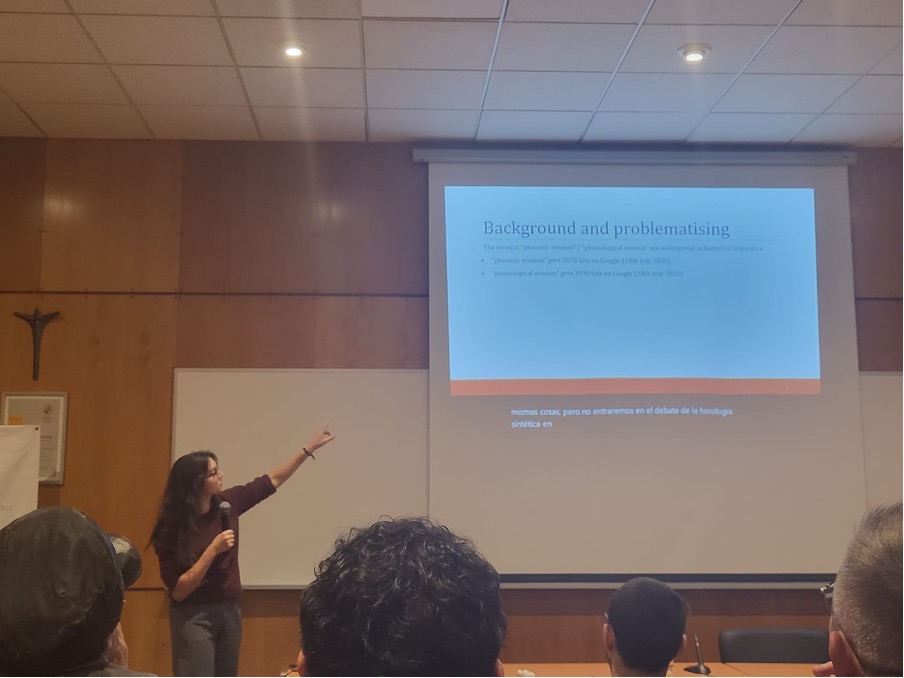
Thanks to the support of PhilSoc’s Travel and Fieldwork bursary I was able to present my research, The myth of phonetic erosion: grammaticalisation, causality, phonology and syntax, at the International Conference of Historical Linguistics (ICHL) in Santiago de Chile from the 18th – 22nd of August. 

ICHL brings together researchers in Historical Linguistics from all areas of the field encouraging discussion between data driven linguistics and both formal and functional theorists alike. The conference facilitates discussion between theoretical silos which in turn promotes an environment where researchers are encouraged to challenge the assumptions of their own frameworks and methodologies. As the largest conference in Historical Linguistics, ICHL was the ideal venue for me to present my research and meet other historical linguists thus beginning to establish myself in the field. 

At ICHL I presented a talk written in collaboration with my supervisor, Patrick Honeybone, investigating the conception ‘phonetic erosion’ in Historical Linguistics, arguing that the uses of the term are so disparate that it cannot possibly mean anything phonologically and is instead characterised by its supposed link to grammaticalisation. We went on to argue that there is no clear causal link between erosion and grammaticalisation which makes the term ultimately meaningless. The content of this presentation pertains to the first section of my PhD which questions the purported relationship between phonological and syntactic changes in grammaticalisation processes. In the ICHL talk I highlighted a need for precision and clarity in the use of terminology within the field and questioned the causal link between phonological and syntactic change presenting a number of open questions for the field such as: 

  • If we except that they are useful concepts, where does grammaticalisation end and erosion begin?
  • How close (in time) do two changes have to be for there to be causal relationship?
  • How do we extract the proposed ‘cause’ from the rest of the historical context?

The ICHL talk sets the stage for the rest of my PhD where I attempt to address such questions with particular focus on the notion of causality and historical process – i.e., what must be true in order for us to say that one change ‘caused’ another and how far back can we trace cause. 

Presenting this, somewhat controversial work, at ICHL sparked informative conversations with people working in various branches of Historical Linguistics providing me a number of fresh perspectives that I will bear in mind going forward. Moreover, several audience members have said that my argument encouraged them to reflect on their own usage of the terms – thus, I hope that sharing my presentation at ICHL has had some non-zero impact of the field of Historical Linguistics.  

I am incredibly grateful to the Philological Society for their travel bursary without which none of this would have been possible! This bursary came at a crucial time for me, as ICHL is a biannual conference this was the only time it is happening during my PhD and as the largest conference in my field it was vital that I attend, but I would not have been able to finance a trip to the Southern Hemisphere without PhilSoc’s generous support. 

Edinburgh Symposium in Historical Phonology

Written by Fae Hicks (Edinburgh)

In the depths of Scottish winter, 1st – 2nd December, we welcomed over 50 Historical Phonologists to Edinburgh for the 7th Edinburgh Symposium in Historical Phonology (ESHP). ESHP is a biannual event that brings together researchers from across the world for a “Historical Phonology party”. As it is a small subfield, events like ESHP are vital to promote and maintain a sense of community within Historical Phonology and we are very grateful to the Philological Society for supporting this event. Thanks to funding from PhilSoc we were able to keep conference fees low and offer a reduced rate to student attendees.

ESHP carves out space to consider the big issues, those overarching questions which guide research in Historical Phonology but are too complex to capture in a twenty-minute talk, like what is a possible phonological change? How can the results of historical phonology inform phonological theorising? And to what extent is phonological change independent of changes that occur at other levels of the grammar? Over two hours (on different days!) our plenary speaker, David Natvig, dove into these latter questions in his talk “Phonology Down and Phonology Up: Historical Phonology at the Interface with Phonetics and Morphology” which explored the key questions of when phonology actually changes and how we can know that it has changed, in part focusing on case studies of vowel shift and velar palatalisation from the history of Norwegian. 

As always, talks at ESHP covered a wide range of topics and methods of investigation from the reconstruction of Hittite stress to experimental phonetic approaches to accounting for sound change. Split across both days, the poster sessions are central to ESHP’s calendar. The poster sessions in particular promote active discussion between attendees at all career stages. We are grateful to the ESHP community for making this not only an intellectually stimulating and entertaining event, but also a familiar and welcoming one. Of course, we are particularly thankful to PhilSoc for enabling us to keep ESHP an accessible event. 

Master’s Bursary 2024-25

Written by Sophie Krol (UCL), a recipient of the Philological Society’s Master’s Bursary 2024-25

It is thanks to the Philological Society and their extremely generous Master’s bursary – and to my supervisors at Newcastle University who brought my attention to the bursary in the first place – that I find myself at the end of an enriching twelve months at UCL.

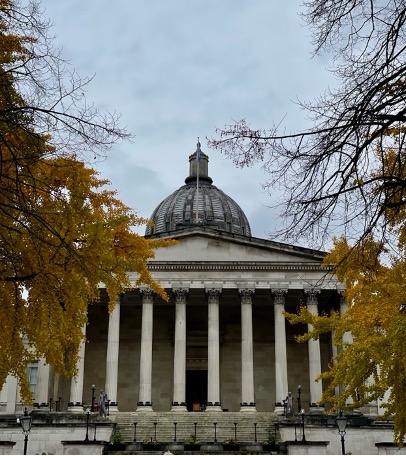
Wilkin’s Building, UCL

As a Linguistics undergraduate at Newcastle (2021-24), I became enthused by topics that hadn’t occurred to me before – from syntactic theories attempting to account for spoken and signed languages alike, to my extended study on relative-clause attachment ambiguity, to the questions of evolutionary linguistics – so much so that I didn’t feel I was done yet.

Spurred on to pursue further study, I came across UCL’s MSc in Language Sciences. Of its five specialisations, one intrigued me the most: sign languages and deaf studies. This was especially the case given its Deafness, Cognition and Language research centre (DCAL), the source of widely impactive research on British Sign Language (BSL) and deafness. Their research areas span neuroplasticity, cross-modal machine translation, and attitudes towards BSL’s significant regional variation, to mention a few.

This specialisation opened doors to learn directly of the rich and diverse deaf culture and community that stands on the shoulders of the likes of Francis Maginn and Helen Keller. In particular, this was made possible by the BSL Level 1 module led by Clive Mason, and the DCAL-specific Psychology and Language Sciences (PALS) modules.

For my Deafness, Cognition and Language module, I chose to present research on the learning of numeracy and mathematics, specifically the attainment gaps commonly observed between D/deaf and hearing peers. The research seemed to repeatedly lead back to one main factor: language deprivation. Devastatingly common in the deaf community – but importantly, avoidably – language deprivation happens when a child misses out on being exposed to a fully-accessible (often, signed) language during their early years. This can have profound, long-term effects that extend well beyond language itself.

My programme culminated in a research project within the Experimental Psychology division – specifically, a psycholinguistic investigation into lexical ambiguity. Broadly speaking, I aimed to inform the research base on factors capable of enhancing reading fluency and efficiency. 75 participants were semantically primed by reading sentences including words that have multiple meanings (homonyms). Crucially, contextual information disambiguated these words towards their less common meanings – take the bird-related meanings of swallow or crane as examplesI manipulated whether this disambiguating context varied or whether it was identical for each exposure of the given homonym. 

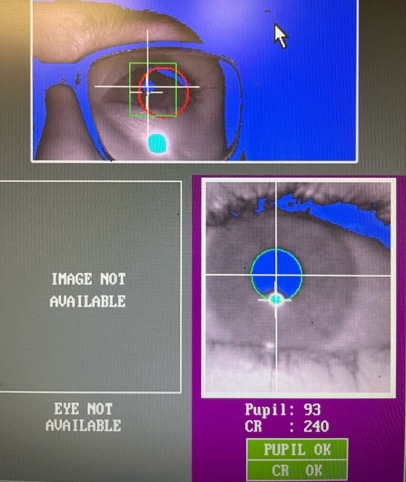
Setup of the Eyelink 1000 tracker

To allow me to examine whether repetitive or variable priming better facilitated readers in accessing infrequent meanings, I used the eye-tracking method. I found that, when previous exposure to a word meaning had occurred in variable contexts, the appropriate meaning would be more likely to be accessed faster (as assumed from faster reading times) upon a next encounter.

Having gained so much from my time here at UCL, I am immensely grateful for the PhilSoc’s Master’s bursary, as well as those that supported me in applying for both the bursary and the course itself.

Interview with Chikelu I. Ezenwafor-Afuecheta, the author of Etulo: a Niger Congo (Idomoid) Language.

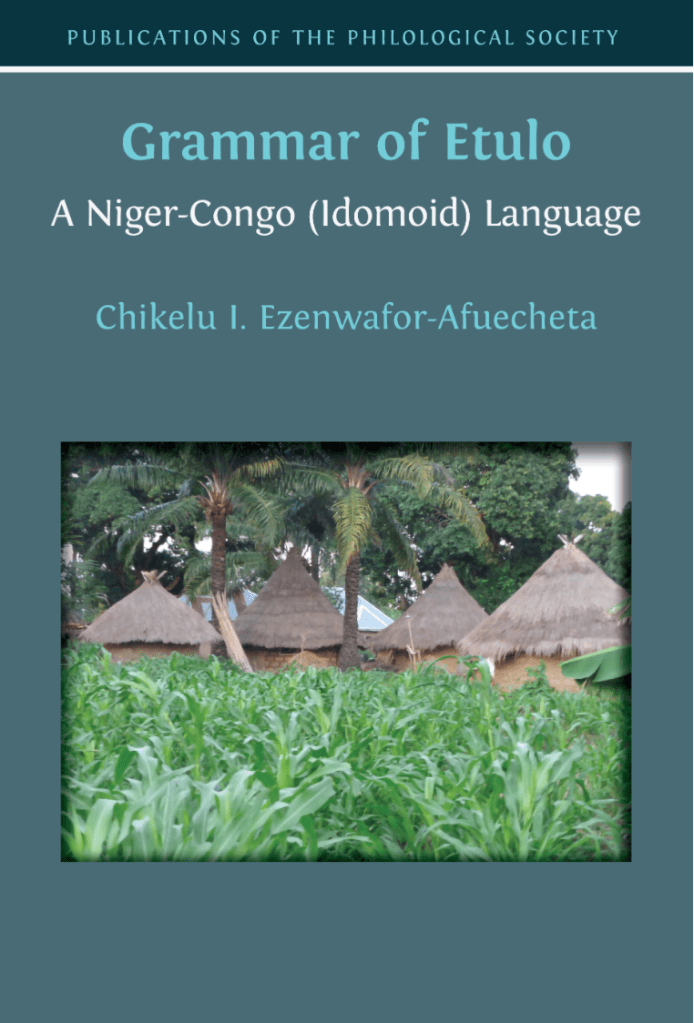
We are delighted that the first open-access monograph of the Publications of Philological Society was published last month by Open Book Publishers. The monograph, entitled Grammar of Etulo: a Niger-Congo (Idomoid) Language by Chikelu I. Ezenwafor-Afuecheta, is available to read online or to download in PDF format free of charge.

In this post, we had to chance to speak to Chikelu and ask her about her experience of researching and writing the grammar. Thanks very much to Chikelu for her thoughtful responses.

  1. How did you first come into contact with this language and what drew you to study it?

Nigeria is home to numerous minority languages, many of which face varying levels of endangerment; one of these is the Etulo language. I first encountered Etulo back in 2010, while doing a Master’s program in Linguistics. One of my classmates had spent her compulsory youth service year living among the Etulo community in Benue State. I was looking to focus my MA thesis on a minority language, and meeting her and through her being introduced to the Etulo community in Buruku Local Government Area, Benue State, greatly influenced my choice of Etulo.  Moreover, Etulo fits a textbook case of a severely endangered language: it’s not taught in schools or used for instruction, it lacks a codified standard, and is only used in everyday home and marketplace conversations in Etulo-speaking areas, where it exists alongside stronger languages like Tiv.

  1. What kind of data did you work with when compiling this grammar? Can you talk us through the process of collecting this?

My research relied entirely on linguistic field data gathered through direct elicitation from native language consultants between 2014 and 2023. The Etulo speakers I worked with are trilingual, fluent in Etulo, Tiv, and partly English. Generally, most Etulo speakers in Benue State are bilingual, speaking both Etulo and Tiv, with Tiv being the dominant local language in the area.

To establish the phonemic inventory of Etulo, I made use of the Swadesh wordlist, Blench’s (2008) comparative wordlist, and the SIL Comparative African Wordlist (SILCAWL), which contains 1,700 lexical items. For morphological analysis, I employed Štekauer’s (2012) questionnaire on word formation processes. Additional syntactic data were obtained using questionnaires from the Max Planck Institute for Evolutionary Anthropology, including Klamer’s (2000) valence questionnaire, the relative clause questionnaire developed by members of the Bantu Psyn project (University of Berlin and Université Lyon, 2010), and Hengeveld’s (2009) questionnaire on complement clauses.

I also used picture-based tasks to elicit data on tense and aspect, as well as narrative and folktale materials to complement the dataset.

  1. How did you decide what to include/exclude, and the order of the chapters?

Before beginning the main phase of my research, I reviewed published grammars of both African and non-African languages to gain a foundational understanding of how grammatical descriptions are structured. Dixon’s Basic Linguistic Theory (Volumes 1–3) was especially useful in guiding the development of my initial set of fieldwork questionnaires.

Data collected during fieldwork later helped refine and narrow down which linguistic features were relevant for inclusion in the Etulo grammar. In certain cases, grammatical categories featured in the questionnaire such as gender or noun class distinctions were not attested in Etulo, and thus were excluded. Conversely, some features, like tone polarity, which were not initially part of the questionnaire, were incorporated into the grammar after being identified as salient in the data.

In essence, the structure of the Etulo grammar was initially influenced by existing grammatical prototypes of African languages and by Dixon’s theoretical framework, but was continuously adapted based on empirical evidence from Etulo. The chapters were organized from the smallest level of linguistic analysis (phonology) to the largest (syntax).

  1. Did you find any features of the language that you weren’t expecting, or that presented a descriptive challenge?

In the course of describing Etulo grammar, I encountered a few analytical challenges—two of which are particularly noteworthy.

The first challenge concerned the Etulo phoneme inventory, specifically the analysis and representation of certain vowel sequences such as [ie, ɪʊ, ɪɔ, io, ia, ɪa, uɛ, ue, ua]. The key question was whether these should be treated as glides (/j/, /w/), as diphthongs (single vowel units), or as non-identical vowel sequences that can each carry tone. Earlier work on Etulo by Armstrong (1974) interpreted these sequences as glides, thereby introducing additional phonemes like gy andky into the inventory.

However, this approach presents a problem: it unnecessarily expands the phoneme inventory, violating the principles of economy and pattern consistency, since these vowel sequences can occur after many consonants in Etulo ( ky, gy, fy, by, my, tsy, bw, fw, tsw, mw as in kye gya bwa fwa.) and as single vowel sounds. Moreover, analyzing them as glides overlooks the fact that the vowels in these sequences often exhibit tonal contrasts that remain distinct. Nor could they be treated as diphthongs, as each vowel in a pair can independently serve as a tone-bearing unit. Consequently, I opted to analyze them as non-identical vowel sequences capable of bearing either identical or contrasting tones. 

The second challenge involved the internal structure of Etulo verbs. Many verbs in Etulo require a noun to co-occur with them as a meaning-specifier, a feature typical of several West African languages. The semantic bond between the verb root and its nominal complement is often so tight that native speakers perceive some verb-noun combinations as single lexical items. This perception may also be reinforced by phonological processes such as vowel elision and contraction, which are frequent in rapid speech. For instance, the verb ʃí áʃí ‘to sing’ is often realized as ʃáʃí after elision of the verb’s final vowel.

The main difficulty, therefore, was distinguishing the verb root from the noun complement. In cases where this distinction was unclear, I relied on syntactic tests specific to Etulo, such as constructions involving noun fronting and verb-root reduplication, to identify the true verb root.

  1. Why do you think language documentation is so important?

Language is far more than a marker of identity.  It is an essential part of culture, the embodiment of a people’s values and knowledge, and the vehicle by which culture is communicated and handed down from one generation to the next. In an era when identities, languages and cultural traditions are vanishing, the task of preserving what remains becomes crucial: through documenting folktales, fading vocabularies, cultural rituals, proverbs, or grammars, we safeguard not just words but the depth of a civilization, the sense of self and community that once felt both sacred and enduring.

  1. If someone wanted to learn more about Etulo and other Niger-Congo languages, where would you direct them?

The Niger-Congo language family is a vast phylum made up of numerous subgroups, some of which are more developed than others. For example, the Igboid and Yoruboid groups, both spoken by millions in Nigeria are relatively better documented and developed, despite also facing endangerment. In contrast, the Idomoid subgroup, which includes minority languages such as Idoma, Yatye, Akweya, Akpa, Eloyi, Igede, Alago, and Etulo, remains far less developed.

While it is easy to find grammar books, online learning materials, and university programs dedicated to Igbo and Yoruba, the same cannot be said for Idomoid languages. Regarding Etulo specifically, its development has not yet reached the point where learners can readily access structured online or physical resources for language learning. However, the Nigerian Bible Translation Trust, in collaboration with some Etulo speakers, has developed an orthography proposal and translated parts of the New Testament into Etulo. There is also a historical account of the Etulo people written by Tabe (2007), along with a few other published studies available online.

Beyond publishing a grammar of Etulo, it is clear that the language requires comprehensive documentation of its cultural heritage. This realization has motivated my current collaboration with members of the Etulo community to develop a proposal aimed at recording Etulo folktales and proverbs, many of which are rapidly disappearing under the growing influence of Tiv, the dominant language and culture in Benue State, Nigeria.From my personal experience, the Etulo people were consistently warm and welcoming, and it was a genuine pleasure to collaborate with them in producing the grammar of the Etulo language. While this work is not without its imperfections, it nevertheless establishes a solid foundation for future teaching materials and further linguistic research on Etulo and other languages in the Idomoid languages subgroup.
International Argument Alternation Workshop 2025, Kobe University

Thanks to the support of the Philological Society’s Travel and Fieldwork Bursary, I had the opportunity to attend the International Argument Alternation Workshop (IAAW 2025), held in Kobe, Japan, on 16-17 July 2025 and hosted by the Graduate School of Humanities at Kobe University. The workshop brought together researchers from across the globe, working in different theoretical frameworks, to discuss a wide range of phenomena where a verb’s arguments can appear in alternative syntactic configurations (i.e. argument alternations) across different languages. This diversity, spanning from generative syntax to corpus-based approaches, created a stimulating environment, especially for young researchers like myself.

My presentation, Argument Realisation in Italian Tough-Movement, explored how certain Italian sentences like (1) relate to their impersonal counterparts like (2) – one of the core phenomena (known as Tough-Movement) I am investigating for my PhD thesis at the University of Cambridge. 

(1) Questi libri sono difficili da leggere.

‘These books are tough to read.’

(2) È difficile leggere questi libri.

‘It is tough to read these books’

While the two look similar on the surface, my work shows that they behave differently in important ways: (1) is much more restrictive than (2) in which types of verbs are allowed, in what additional inflectional and discourse-related material can be added to the infinitival clause, and in the interpretation of the agent of the verb. Furthermore, the overlap between adjectives licensing (1) and (2) is far from perfect: for instance, although adjectives like facile (‘easy’) and impossibile (‘impossible’) are possible in both, pronto (‘ready’) is only grammatical in (1) whereas sbagliato (‘wrong’) is only acceptable in (2). This suggests that the semantic features of the adjectives might indeed play an important role. So, despite surface similarities, the two alternants above are best analysed as separate constructions. Finally, in light of these considerations, I discussed how the tough-movement alternation fits into the wider typology of passive-like configurations and how it relates to other infinitival constructions in the Indo-European family. 

Presenting at IAAW was a genuinely valuable experience for my doctoral journey. Receiving feedback from researchers working on a wide variety of languages (including Japanese, Basque, Hawaiian, and Turkish) and within different theoretical traditions made me think about my data and its broader significance in new ways. Many colleagues suggested parallels from languages they work on or alternative technical solutions, which will help me refine my analysis and perhaps expand its scope.

Beyond the academic side, the location was simply outstanding. Kobe offered a perfect mix of vibrant city life, ocean views, and green mountains in the background – which you have to partially climb to get to the campus! 

The view of Kobe and the ocean from the room hosting the workshop

The workshop was impeccably organised, with warm hospitality and an informal, friendly atmosphere. We also enjoyed fantastic Japanese food at the conference dinner (the unagi was particularly memorable) which provided plenty of opportunities for further discussions and building new connections over a glass of sake

I left Kobe with a notebook full of fresh ideas, a wider network of colleagues, and a renewed sense of direction for my research. I am deeply grateful to the Philological Society for making it possible for me to be part of such a rich and welcoming academic exchange.

University of Malawi 2025 School of Humanities and Social Sciences Conference 

Report by Mzati Nkolokosa, PhD Student in Linguistics, University of Essex

Thanks to the generous support of the Philological Society Travel and Fieldwork Bursary, I presented at the University of Malawi 2025 School of Humanities and Social Sciences Conference, held in the country’s first capital city of Zomba on 7 and 8 August. The conference was held under the theme ‘Reimagining Sustainable Futures: Voices from the Global South’ and was attended by nearly 150 researchers, NGO leaders, artists and private sector captains. 

The theme speaks to my PhD study which is on Cinyanja speakers’ mental health perspectives. The study is an investigation the conceptualisation of mental health among Cinyanja speakers in Malawi.  The main goal is to bring ‘voices from the global south’ not only to the attention of the rest of the world but also to the Global South itself. The Global South needs to listen to its own voice and before requiring the rest of the world to listen to pay attention to the voice. The conference was, therefore, a significant opportunity for me to present Cinyanja speakers’ perspectives on mental health to the speakers of the language and others. This is the first study to investigate mental health from a linguistic perspective among Cinyanja speakers. 

The conference had two objectives. The first was to highlight the critical contributions of the Humanities and Social Sciences in shaping our understanding of sustainability and informing pathways towards more equitable and resilient futures. The second objective was to enhance transdisciplinary dialogue and collaboration among scholars, researchers, policymakers and practitioners by examining the social and political practices related to sustainable futures. 

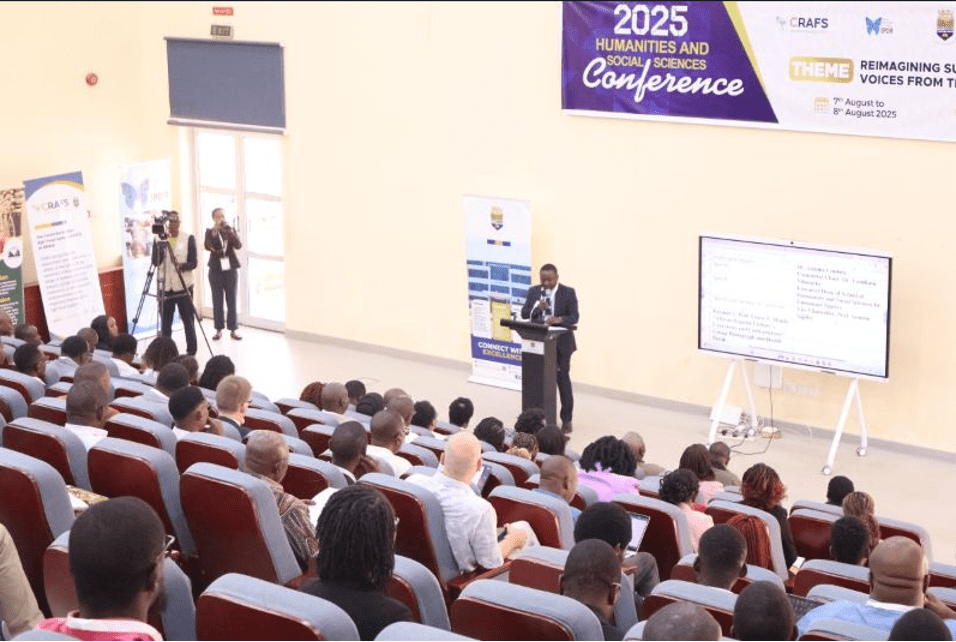
Figure 1: University of Malawi Vice Chancellor Professor Samson Sajidu opening the conference on 7 August 2025

I presented two papers. The first paper was titled ‘Ubuntu or Umunthu?: Decolonising from Dominant Postcolonial Perspectives in the Global South’. The paper, which is the theoretical framework of my study, attempts to define Umunthufrom a Malawian Cinyanja speakers’ perspective and contrast it with South Africa’s Ubuntu perspective from IsiZulu speakers. The main difference is that Umunthu perceives the individual as central to the existence of the community while Ubuntu perceives the community as central to the existence of the individual. Secondly, Umunthu is about economic independence of the individual while Ubuntu is about communitarianism. My study argues that Umunthu is the way Cinyanja speakers conceptualise mental health. Secondly, the study argues for an awakening to dominant perspectives within the Global South itself.  The second paper was titled ‘Maganizo: Cinyanja speakers’ way of conceptualising the stresses of life’. The paper investigates Umunthu-related language choices that Cinyanja speakers use to conceptualise and communicate mental problems. A key finding is that Umunthu communicates ‘mental health’ while maganizo is a concept that communicates the stresses of life that can lead to mental disorders. The findings of the study are significant because they bring to light the rich knowledge about mental health that Cinyanja speakers have stored in their language.   

Figure 2: presenting my study on Maganizo on 8 August 2025

I chose to present at the conference for two reasons. The first is that the conference offered me the opportunity to present in my home country, which is supposed to be the primary beneficiary of the study. Engaging with researchers and scholars from the study setting provided feedback that is useful for the completion of my thesis. The second is that the conference was an opportunity to grow my network of researchers with shared interests. Indeed, I am happy to report that I met two South Africa based researchers with whom I had meetings and agreed to remain in contact as we think of collaboration in future.  

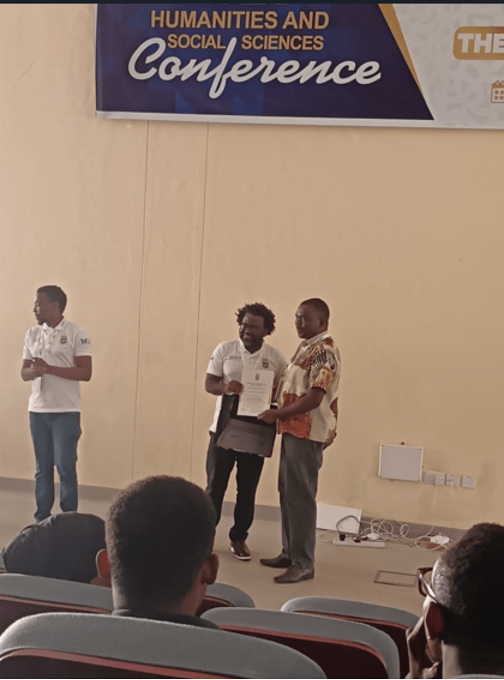
Figure 3: Receiving a certificate for best presenter in the category of PG students from Dean of Humanities and Social Sciences Dr. Emmanuel Ngwira

The following were two keynote speakers at the conference. Professor Grace A Musila who spoke on ‘African Popular Culture’s Currencies and Contradictions’ while on the second day, Dr Ronald Mangani spoke on ‘African Leadership and Sustainable Development’. 

I would like to thank the Philological Society for its support of £1000 which I used to purchase a flight ticket to Malawi for which I am very grateful. I am also grateful to my supervisor, Professor Hannah Gibson, for her support when I was preparing for the conference. 

Masters Bursary

Written by Joshua Coombs (University of York), recipient of the philological society’s Masters Bursary.

I am extremely grateful to the philological society for awarding me the Master’s Bursary for the 2024/25 academic year. Sociolinguistics has been my academic passion since I was first introduced to it at Sixth Form. After completing my undergraduate at the University of Gloucestershire in 2021, I dedicated the start of my career to teaching A Level English Language at a large sixth form college in Hampshire, as well as working as an examiner so I could contribute to the teaching and learning of sociolinguistics as much as possible. While I enjoyed teaching, I knew that I wanted to return to university one day to continue my own study of sociolinguistics, which is ultimately what led me to apply for the Msc in Linguistics at the University of York.

This course was far more scientific than I initially anticipated, which has honestly been a very welcome surprise. In semester one, for example, I took an introductory phonetics and phonology module where I learned how to use the speech processing software ‘praat’, in order to empirically study speech and quantitatively examine variation between speakers. Through taking this module, I gained skills that I would use throughout the remainder of the year, and became especially interested in the study of sociophonetics.

My research interests lie in language variation and change, especially in the South West of England. In a module titled ‘Advanced Topics in Language Variation & Change’, I conducted a research project using data from the Our Dialects website to examine language change and dialect levelling in three neighbouring cities in the South West: Salisbury, Southampton, and Bournemouth. I found that all three regions appeared to be experiencing supra-regional change, potentially spurred on by persistent dialect contact. This project acted as a spring-board for my dissertation, a sociophonetic investigation of apparent-time sound change in Wiltshire. Using data from paired sociolinguistic interviews with 12 male speakers, I investigated variation in two linguistic variables between younger and older speakers in Salisbury: the BATH vowel (i.e. b[a:]th vs b[ɑ:]th) and rhoticity. I found that [ɑ:] variants of BATH are a new innovation amongst younger speakers in the region, and that rhoticity is now a feature exclusive to older speakers who tend to use it more within careful speech.

Alongside my studies, I have also been extremely fortunate to have taken part in many extra-curricular activities this year. To name just a few: I attended a summer school led by Dr Ian Cushing at Manchester Metropolitan University about Linguistic Social Justice, worked on the ESRC-funded Generations of London English research project as a research associate, and sat on the organising committee for the A Level English Language ToolkitCPD event hosted by the University of York, where I presented a talk to teachers of A Level English Language across the country. I’ve also had the opportunity to disseminate my research at three conferences this year: An invited talk at the University of Alberta’s LCC graduate conference, and two posters at both the LAELPG at Lancaster University and LVC15, one of the largest variationist sociolinguistic conferences in the world.

Without this bursary, this year would have been much more of a financial burden than it ended up being. I have had an amazing year, and while I begin employment again next month as a data analyst at my local council, I am genuinely considering pursuing further study through a PhD in Linguistics in the next few years, something that up until now, I never thought I would have been able to do.

3rd International Conference on Tone and Intonation 

From 16th to 19th May 2025, I attended the 3rd International Conference on Tone and Intonation (TAI), made possible by the generous funding of the Philological Society.

Views of lake Ammersee a short walk from the venue.

The conference was held in Herrsching am Ammersee, a picturesque lakeside town just outside of Munich. We were fortunate enough to enjoy beautiful weather throughout, with clear views of the lake and the surrounding mountains providing a stunning backdrop to the event.

The TAI conference brings together researchers working on a wide range of topics related to tone and intonation, including language documentation, diachronic change, phonological theory, and, in my case, second language acquisition.  With 85 accepted papers (58 posters and 27 talks), this was the largest TAI to date, drawing participants from across the globe. Although it was my first time attending TAI, I was pleased to reconnect with researchers I had met at previous conferences and to meet new people whose work closely aligns with my own. 

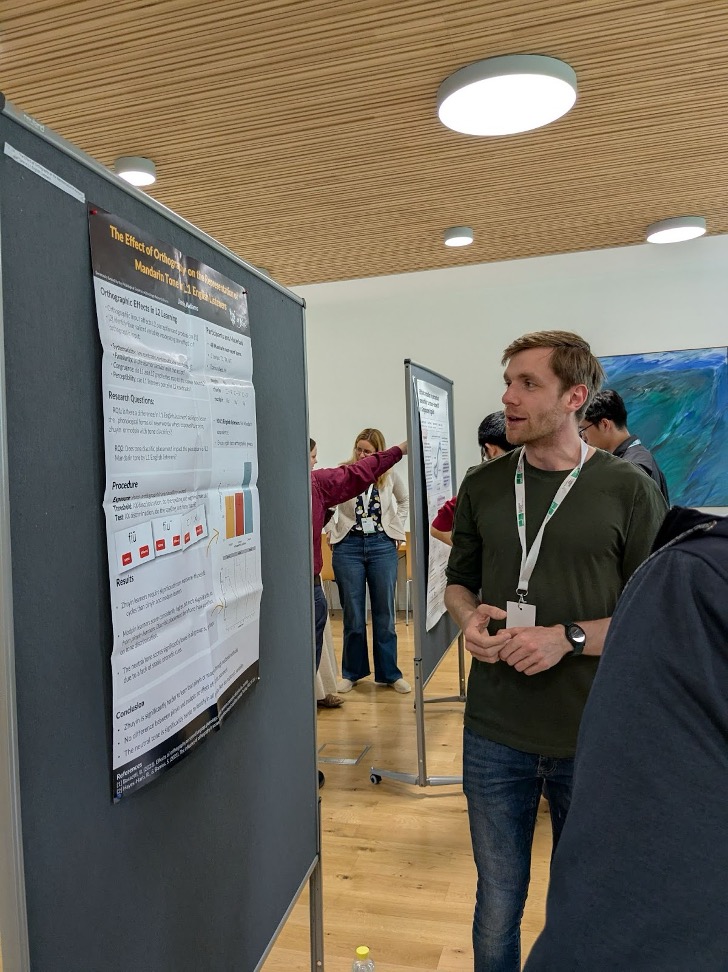
I presented a poster on orthographic effects in the perception of Mandarin tone by L1 English learners. This work forms a key part of my PhD project and focusses on how the visual representation of tone and the placement of tone diacritics can influence learners’ mental representation and perception of tone. Presenting a poster proved to be an ideal format for this topic as it allowed me to engage in in-depth discussions with a wide range of researchers. The feedback I received was both thoughtful and constructive and I left with new ideas and perspectives that will undoubtedly strengthen both my thesis and future research.

Presenting my (slightly creased!) poster.

Attending TAI was an immensely valuable experience, not only for disseminating the main findings of my doctoral research, but also for building and maintaining academic connections within the international tone and intonation community. I am deeply grateful to the Philological Society for their support. Without their funding, my trip to Germany would not have been possible.

Pacific Second Language Research Forum 2025

Thanks to the generous support of the PhilSoc Travel and Fieldwork Bursary, I had the opportunity to attend PacSLRF 2025 – Pacific Second Language Research Forum 2025 – that took place in Shanghai, China, from 30 May to 1 June 2025. PacSLRF is a key international conference that has been providing a forum for dissemination of Second Language Acquisition research in the Asia-Pacific region. At this conference, I presented my paper entitled “Online and Offline Anaphora Dependency Resolution with Mandarin Third-Person Pronoun ‘ta’ in L1-, L2-, and L3-Mandarin” based on a subset of my PhD research.

My PhD project investigates how Mandarin third person pronouns are interpreted by third language learners of Mandarin: native Japanese speakers who are learning Mandarin as a third language (L3) after learning English as a second language (L2). The aim is to explore the possible influence of both the first language (L1) and second language (L2) English — a compulsory language at school in Japan — on L3-Mandarin. 

In this presentation, I shared my findings obtained from Mandarin temporal biclausal sentences such as (1-2). Two types of anaphora are defined by the linear order of the pronoun “ta” (=s/he) and the potential sentence-internal referent: Backward (pronoun-first) (1) versus Forward (pronoun-second) (2). 

(1) Backward

Dang  ta    kan  zazhi        de-shihou, Lili zai-chi     xiangjiao.            (ta =  她 ‘she’)

When she read magazine at-time       Lili eat-PRG banana.

‘While she reads a magazine, Lili is eating a banana.’ 

(2) Forward

Dang  Lili kan  zazhi        de-shihou, ta   zai-chi     xiangjiao.             (ta =  她 ‘she’)

When Lili read magazine at-time      she eat-PRG banana.

‘While Lili reads a magazine, she is eating a banana.’ 

The structures were selected due to the unique similarity/dissimilarity of preferred interpretation of pronouns between the languages. Findings from existing L1 research on Mandarin, English, and Japanese are summarised in Table 1. 

The structures were selected due to the unique similarity/dissimilarity of preferred interpretation of pronouns between the languages. Findings from existing L1 research on Mandarin, English, and Japanese are summarised in Table 1. 

Table 1: L1 Findings in Mandarin, English, and Japanese on Acceptance of Sentence-internal Coreference Reading

 BackwardForward
MandarinNoYes
EnglishYesYes
JapaneseNoNo 

(Su et al., 2024; Su, 2020; Nagano, 2015; Zhao, 2014)

Yes means that sentence-internal coreference reading between the pronoun she and the sentence-internal referent Lili is accepted, and No represents that it is rejected. 

The varying interpretation patterns allow us to explore how the similarity/dissimilarity between learners’ L1/L2 and L3 on the interpretation of a particular property — in this case overt third person pronouns — affect their L3. We used a combination of a coreference judgement task and a real-time reading task on three groups of participants: L1-Japanese L2-English L3-Mandarin speakers; L1-English L2-Mandarin speakers; and L1-Mandarin speakers. The aim of using two different tasks was to shed light on the multifaceted nature of the prior language influences.

In the poster, I shared the results obtained from the L1-/L2-/L3-Mandarin speakers in both tasks, along with possible takeaways from the findings. I received many useful comments and feedback from audience members. Those included alternative point of views on my target Mandarin sentences, pros and cons of using certain L3 acquisition models to discuss my findings, and possible effects of task designs on pronoun interpretation in Mandarin. Importantly, due to the location, there were many L1-Mandarin-speaking researchers present at the conference, including those who are actually working on acquisition of Mandarin as an L3. It was such a great honour to have discussions with them. I truly appreciate the support from the PhilSoc travel grant, by giving me this valuable opportunity to attend the conference all the way from the UK!   

References:

Nagano, M. (2015). Interpretation of Overt Pronouns in L1 and L2 Japanese: The Role of Context [Doctor of Philosophy, The City University of New York]. 

Su, Y.-C. (2020). Backward/forward anaphora in child and adult Mandarin Chinese. Language Acquisition, 27(2), 187–216.

Su, Y.-C., Sorace, A., Hirose, Y., Mochizuki, K., Hirakawa, M., Nakayama, M., Chen, C.-H., & Hsieh, H.-Y. (2025). Backward anaphora in L2 acquisition of English, Mandarin and Japanese. Second Language Research. 

Zhao, L. X. (2014). Ultimate attainment of anaphora resolution in L2 Chinese. Second Language Research, 30(3), 381–407.