written by Sarah Eichhorn (University of Nottingham), Recipient of PhilSoc’s Burr Fund Travel and Fieldwork Bursary for PhD research
Within the field of sociolinguistics, growing attention has been paid to regional and minority languages in recent decades, particularly as communities and governments are becoming increasingly aware of diversity and multilingualism within their societies. France presents a particularly noteworthy context due to its wealth of regional languages that pre-date Standard French—such as Breton, a Brythonic Celtic language—as well as an increasing presence of minority languages like Arabic, which have come to the country more recently via immigration, and are now being passed on to subsequent French-born generations through familial transmission. Despite the linguistic diversity of France, French government language policy heavily favours monolingualism in French, which has historically led to and continues to perpetuate the marginalization of regional and minority languages. However, many regional languages have seen a resurgence in efforts toward revitalization—e.g., through the establishment of immersion schools (Adam 2020), or more militant efforts such as protests and marches. This has led to an increase in visibility and numbers of speakers. Efforts have also been made toward including languages like Arabic as foreign language options in schools (Soriano 2019).
Most research to date focuses on regional OR minority languages, and very little comparative research has been conducted to explore the similarities and differences between the two kinds of language communities (see Filhon 2010). This gap in research has driven the development of my PhD, which seeks to explore a comparative analysis of the Breton-speaking and Arabic-speaking communities in Brittany. The issues I am examining are:
- How two different communities of language users define and describe their experiences with regard to language. I use the term ‘language user’ rather than ‘speaker’ in order to encompass all individuals of any kind of proficiency in a given language. Many of the Breton language users interviewed for my research are enrolled in language courses and would thus not yet consider themselves full ‘speakers’ of the language, while many Arabic language users speak what they consider to be a ‘dialect’, and do not consider themselves to know ‘true’ Classical/Standard Arabic;
- whether the language communities interact or intersect; and
- how they deal with challenges such as French language policy and educational provision.
Through transcribed interview extracts and questionnaires, I am seeking to shed light on how these issues shape the sociolinguistic landscape of France, and Brittany in particular. My two-part research methodology comprises:
- An online questionnaire in two versions (one for Breton and one for Arabic), distributed to language users across France. I am currently in the process of collecting and analysing responses.
- Semi-structured interviews conducted with language users across Brittany.
With funding from the Philological Society I undertook eleven weeks of fieldwork in Brittany during May to August 2022. I spent one week in Nantes—a diverse city that, although administratively no longer part of Brittany, is historically considered part of the region and is a hub for Breton language revitalization—and 10 weeks in Rennes, the vibrant capital of Brittany and an even greater hub of Breton revitalization and diversity. I also occasionally travelled to cities such as St-Brieuc and Guingamp for interviews. In total, I conducted interviews with 29 Arabic language users and 27 Breton language users, with a generally equal distribution of age groups between 16 and 65+. The majority of Breton language users have learned or studied Breton in school or in adulthood, and only three learned the language at home. The vast majority of Arabic language users have grown up speaking the language, although it must be noted that most individuals speak a particular dialect, such as Moroccan Arabic or darija, while Classical/Standard Arabic is generally learned in school or at cultural/religious associations (see Caubet 2007, 2008).
I am currently in the earliest stages of data analysis, however some preliminary themes and comparisons have arisen already, such as a tendency for users of both languages to employ the word richesse ‘richness’ to describe their feelings toward their multilingualism. Also, a particularly surprising overlap occurred when I attended several events at an Algerian cultural association and met and interviewed individuals from the Kabylie region, who compared the situation of the indigenous Kabyle language in Algeria to that of Breton in Brittany, and found solidarity with their Breton neighbours and a mutual desire to support linguistic and cultural diversity in both countries.
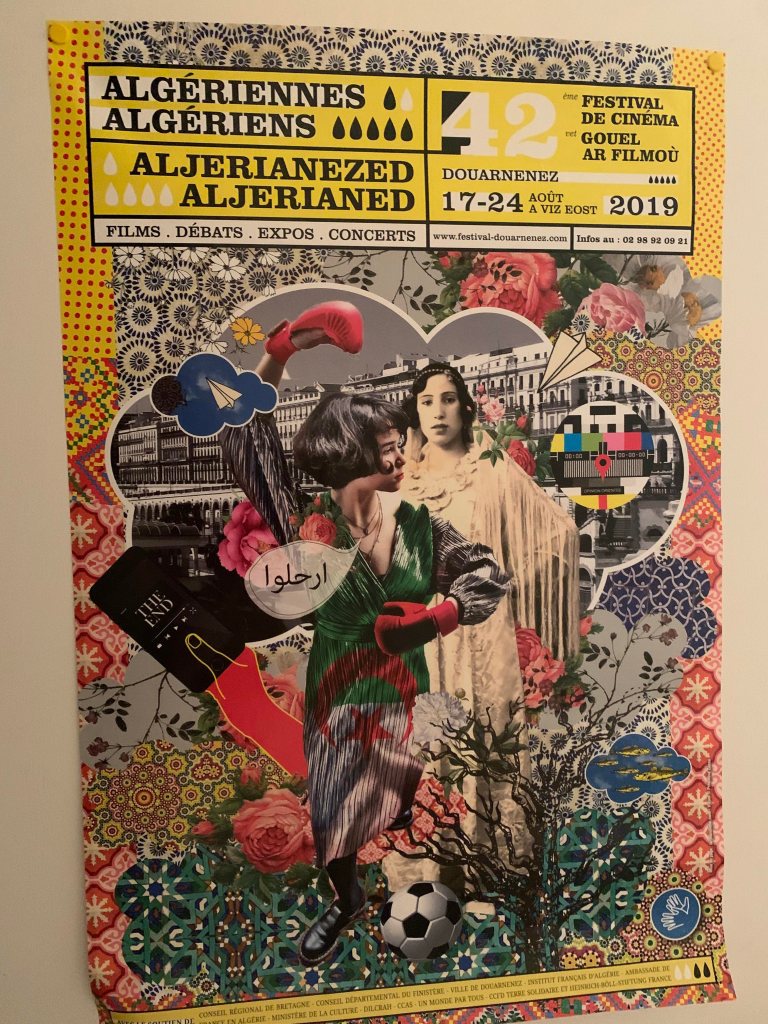
The experience of interviewing such a range of individuals and collecting their fascinating stories was rewarding and exciting, and I look forward to cross-analysing the data alongside the questionnaire results.
References
Adam, C. (2020). Bilinguisme scolaire : Familles, écoles, identités en Bretagne. Berlin: Peter Lang GmbH.
Caubet, D. (2007). L’arabe maghrébin-darja, « langue de France », dans les parlers jeunes et les productions culturelles : un usage banalisé ? In Pratiques linguistiques des jeunes en terrain plurilingue (pp. 25–46). L’Harmattan.
Caubet, D. (2008). Immigrant languages and languages of France. Mapping Linguistic Diversity in Multicultural Contexts, 163–194.
Filhon, A. (2010). Transmission familiale des langues en France : Évolutions historiques et concurrences. Annales de démographie historique, 119 (1), 205–222.
Soriano, É. (2019). L’arabe à l’école : Hiérarchie des mobilités géographiques, inégalités des conditions linguistiques. Recherches En Didactique Des Langues et Des Cultures, 16(2), 1–20.




 The Philological Society Blog