The Philological Society is the oldest learned society in Great Britain devoted to the scholarly study of language and languages. It is also a registered charity (no. 1014370). It was established in its present form in 1842, consisting partly of members of a society of the same name established at the University of London in 1830 “to investigate and promote the study and knowledge of the structure, the affinities, and the history of languages”. As well as encouraging all aspects of the study of language, PhilSoc has a particular interest in historical and comparative linguistics, and maintains its traditional interest in the structure, development, and varieties of Modern English.
Analogical Levelling and Optimisation: the Treatment of Pointless Lexical Allomorphy in Greek
by Helen Sims-Williams (University of Surrey)
Ancient Greek verbal morphology involved extensive allomorphy of lexical morphemes, most of which was phonologically and semantically arbitrary, lexically idiosyncratic, and functionally redundant. This was subsequently reduced through analogical levelling, which eliminates alternations in favour of a single phonological expression of underlying meaning. This reduction of arbitrary complexity is often observed in the development of morphological systems, which has inspired a common view of morphological change as being guided by universal preferences, nudging languages along paths which will lead them to a more optimal status. This paper applies data from the history of Greek to two questions about analogical levelling and the role of ‘optimisation’. Firstly, is levelling motivated by a universal preference for a one-to-one alignment of meaning and form? Secondly, is the direction of levelling determined by universal preferences for particular ways of marking morphosyntactic distinctions? I will argue that the answer to both questions is no: the developments observed here are remarkably well predicted by language-specific, formal properties of paradigms, without the need to invoke universal preferences. These facts are best accommodated if speaker competence includes detailed probabilistic information about the predictive structure of paradigms, which has important implications for morphological theory, as well as historical linguistics.
Trade Pidgins in China: Historical and Grammatical Relationships
by Michelle Li
Sino-western contacts began in the 16th century when Europeans started open trade with China. Two trade pidgins, Macau Pidgin Portuguese (MPP) and Chinese Pidgin English (CPE), arose during the Canton trade period. This paper examines the historical and grammatical relationships of these two pidgins by drawing data from 19th century phrasebooks. This study argues for a close connection between MPP and CPE with reference to three grammatical features which go beyond shared vocabulary: locative copulas, form of personal pronouns, and prepositional complementisers. While these grammatical properties find little resemblance in the recognised source languages for CPE, parallel uses are attested in MPP, which therefore appears to provide the model for these properties in CPE.
The present paper was inspired by Richard Coates’s 1998 article ‘A new analysis of the name London’, in which he refutes the traditional derivation of the name from the form Londinium recorded in the Classical sources on the grounds that its Old English ancestor Lunden presupposes a British (that is to say, Celtic) source form *[Lōndonjon] with a back vowel in the second syllable. I wish further to clarify the history of this name in two respects by showing that: (i) the British name must have reached western Germanic dialects prior to West Germanic Consonant Lengthening and thus in all probability prior to the Anglo-Saxon settlements in England, and: (ii) that *Londonion (with a short [o]) belongs to an identifiable British place-name type, even though the identity of the lexical base lond- remains rather elusive and information on a native settlement is confined to a single historical source, which locates it to the south of the Thames.
Round table discussion with Aaron Ecay (Unversity of York), Seth Mehl (University of Sheffield), Nick Zair (Univeristy of Cambridge), chaired by Cécile De Cat (University of Leeds)
Is linguistics an empirical science? How reliable are the data on which linguistic analyses and theories are based? These questions are not new, but in light of the disturbing findings of the Reproducibility Project in psychological sciences, the need to revisit them has become more pressing. This round table discussion will start with presentations from three postdoctoral researchers, who will discuss the question of data collection and analysis and the interpretation of linguistic evidence.
This panel will be held on 11 November 2016 at 4.15pm in the Great Woodhouse Room, University House, University of Leeds, LS2 9JS.
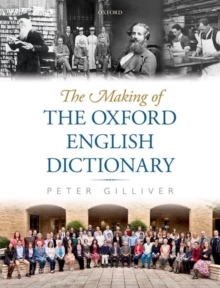
by Peter Gilliver (Associate Editor, Oxford English Dictionary)
The origins of the Oxford English Dictionary, and indeed its fortunes for much of the period when its first edition was compiled, were so closely bound up with the Philological Society that it is hardly surprising that it was long known in some quarters as ‘the Society’s Dictionary’. Accordingly, the Society’s members may be interested to know something about the new history of the project which has just been published by Oxford University Press.
It has been many years in the making. In the late 1990s, about a decade after I took up a position as a member of the Dictionary’s current editorial staff, I began to contemplate the idea of compiling a new history of it. Many will be familiar with some of the other histories of the OED that were already available at that time, or have appeared since: Caught in the Web of Words for example, Elisabeth Murray’s magisterial biography of her grandfather James Murray (which inevitably only manages to tell his story by also telling the story of the work with which his prodigious energies and intellect were taken up for over half his life), or Simon Winchester’s The Meaning of Everything. However, I thought that my own knowledge of the Dictionary, gained through years of constant engagement with its text as a practising lexicographer, might qualify me to take a fresh look at the subject. Moreover, I had already begun to explore the Dictionary’s archives, having become interested in the lexicographical work done by J. R. R. Tolkien as one of my predecessors on the staff (and given a conference paper on the subject in 1992), and I could see that there was a great deal more to be discovered.
I decided that there might be advantages in combining the task of researching and writing the history of the OED with my ‘day job’ as one of the team of lexicographers engaged in preparing the Dictionary’s third edition. Working on the two tasks concurrently has indeed been beneficial to both—the cross-fertilization between ‘doing lexicography’and writing the history of one of its greatest projects has taken place in both directions—but it has also had the disadvantage that it took me fourteen years to complete the book.
James Murray in the Scriptorium
It gives me great pleasure to take this opportunity to acknowledge, as I already have done in the preface to the book, the generosity of the Council of the Philological Society in allowing me to consult the Society’s records; many of these records are currently deposited in the archives of Oxford University Press, making it easy to consult them at the same time as the OED‘s own enormous archive. In particular, the minute books for the Society’s meetings—both ordinary meetings, and meetings of the Council—from the earliest years of work on the Dictionary have greatly enriched the story, with fascinating detail about such matters as the protracted behind-the-scenes manoeuvring with key figures in the Society that preceded the eventual signing of contracts with OUP in 1879, and the thorough briefings about the project’s progress during the ensuing decades, which Society members received (usually directly from one or other of the Dictionary’s Editors) at regular ‘Dictionary Evenings’—privileged information, which the Society was often the first to hear, and which in some cases never got written down anywhere else.
The history of the OED has an intrinsic interest to anyone interested in linguistic scholarship, the history of English, and British cultural history more generally; I hope that the Society’s close association with the Dictionary will give further interest to my book for Society members. They certainly have good reason to be proud of the part played by the Society, and by many of its individual members, in the inception and compilation of the Dictionary, arguably one of the greatest philological projects ever undertaken.
‘The Making of the Oxford English Dictionary’ is published by Oxford University Press (ISBN 9780199283620).
Why might a parent say to a child ‘Is that your coat on the floor?’ as a means of getting them to pick it up, rather than using a directive, ‘Pick up your coat’?
Work on indirect utterances has focused exclusively on what the speaker is assumed to gain from indirectness. In contrast, this talk uses insights and data—both audio- and video-recorded—from Conversation Analysis (CA) to illuminate observable recipient conduct as a means of identifying the interactional motivations for a speaker to be indirect. Central to the analysis is the observation that recipients do work of various kinds to exert agency in response; to establish that what they are doing has a degree of autonomy, rather than being purely acquiescent in response to a prior turn. It turns out that linguistic mechanisms deployed in the pursuit of autonomy figure centrally in this empirically-grounded account of indirectness.
A video recording of the talk can be found below.
This paper was read at the Philological Society meeting in London (Senate House, University of London, Malet St, London WC1E 7HU, room G21A) on Friday, 14 October, 4.15pm.
It has been just over a month since we announced that the Philological Society Blog would go live in mid-October, to coincide with the first regular PhilSoc meeting of the academic year 2016/17. So far, the results are very encouraging!
Since the beginning of September, we have received more than a dozen offers to write blog posts from members at varying stages of their careers and from a variety of places: from master’s students to permanent postholders, working at the Universities of Cambridge, Manchester, Oxford, Reading, Sheffield, and Surrey.
Come October, members can expect interesting insights into new research projects, fieldwork reports, and outlines of doctoral research, next to general news from the Society such as abstracts of papers to be read at meetings and articles to appear in the Transactions.
In the meanwhile, we encourage all members to think about writing a blog post about their own research, projects, fieldwork, books, or recent/future conferences (whether organised or attended). As outlined in our new style guide, contributors have great freedom in their choice of topic and form – and we hope that they will use the opportunity to share their findings, thoughts, and questions with other linguists.
All members interested in writing a post are asked to get in touch via the contact form or by email to studentassoc {at} philsoc.org.uk .
Over the course of the last academic year, PhilSoc has decided to launch a blog for news, research reports, and announcements that will be of interest to members of the Society.
Beginning with the first regular meeting of the Philological Society in the academic year 2016/17 on 14 October, the blog will be updated on a regular basis (at least every 10 days) and will offer a variety of entries:
abstracts of papers to be read at PhilSoc meetings and of the papers to appear in TPS
reports on Outreach activities facilitated by the Society
summaries of members’ activities funded by the Society (conference travel, fieldwork, etc.)
news from Master’s Students on PhilSoc Bursaries
research reports from members of the Society
We strongly encourage PhilSoc members to use this blog as a platform to share their recent, current, and future research projects, elicit informal feedback on their ideas, and to advertise events and projects they are involved in.
Similarly, we hope that members at all stages of their career (doctoral, ECR, permanent postholders) will share their news, thoughts, and projects with the rest of the Society. These can take the form of short abstracts, longer outlines of projects, questions concerning a research area, calls for participants or contributors, opinion pieces concerning current linguistic topics, or announcements of larger research projects.
Members who have received a bursary or other funding from the Society in the past year are requested to compose a short report on their work or activities.
Every entry will be open to comments from the PhilSoc membership, which we hope will allow members to exchange opinions, links, and other resources with one another.
All members interested in contributing to the blog are invited to do so directly by following this guide. For any further questions or suggestions, feel free to comment on this entry, or to get in touch with the Secretary for Student Associates (Robin Meyer, studentassoc {at} philsoc.org.uk).
The grammaticalisation of possessive person marking: a typological approach
by Marlou van Rijn (University of Amsterdam)
This study focuses on the grammaticalization of agreement markers from possessive pronouns, which has two different dimensions: loss of referentiality (function) and loss of morpho-phonological independence (form). I examine the referential potential and formal expression type of possessive person markers in a worldwide sample of 39 languages with an alienability distinction. Referential potential is measured independently of expression type by applying a new typology of person markers. First, I demonstrate that inalienable possessive marking is at least as referential and formally independent as alienable possessive marking, and often less referential and less independent. Unlike explanations in terms of frequency and iconicity, I argue that this asymmetry is essentially semantics-based: the presence of a possessive relationship is inherent to the meaning of the inalienable noun, which is therefore in less need of expressive marking than alienable nouns. Second, I show that loss of referentiality correlates with loss in form, but in a relative rather than an absolute sense: in individual languages, higher referential markers never show a greater degree of bonding with the possessee than lower referential markers. These results suggest that function and form evolve in the same direction, but need not evolve at the same pace.

 The Philological Society Blog