Conference announcement: mFiL 2018

by Sarah Mahmood (University of Manchester)

The Manchester Forum in Linguistics (mFiL) is an annual conference for early career researchers in all fields of linguistics. The aim of the conference, to take place on 26-27 April 2018 at the University of Manchester, is to share current work, results and problems and to provide information and advice for postgraduate students, post-doctoral scholars and others in the early stages of their scientific career. This includes the presentation of papers and posters, plenary talks and a careers panel, as well as a social programme including a conference dinner and informal drinks.

The mFiL, which is being organised now for the sixth time (last held in April 2017), is the successor of a postgraduate linguistics conference that ran in Manchester from 1992 until 2011 almost annually. The conference adheres to strict standards of scientific rigour: all abstract submissions are double-blind peer-reviewed by two experts, mostly professors and lecturers from various UK universities, and only submissions with a solid scientific contribution are accepted for presentation at the conference. Submissions that have implications for linguistic theory generally or that employ novel empirical methods are especially encouraged.

Submissions for oral and poster presentations in all areas of linguistics are welcomed.

Oral presentations should be no more than 20 minutes in length with an additional 10 minutes allocated for questions, comments and discussion. Poster presentations will be presented during a dedicated session on the schedule.

The deadline for submissions is 11 February 2018 (midnight GMT).

See the conference websitefor more details.

Syntactic microvariation in Romance – bridging synchrony and diachrony: the case of SI

by Sam Wolfe (University of Oxford)

Major syntactic differences between the medieval Romance languages and their modern counterparts have been noted for well over a century (Tobler 1875; Diez 1882; Thurneysen 1892; Meyer-Lübke 1889), with a body of more recent work highlighting important synchronic variation amongst the medieval languages (Vance, Donaldson & Steiner 2009; Wolfe 2015, forthcoming), and diachronic variation observable in texts from different stages of the medieval period (Ledgeway 2009; Labelle & Hirschbühler 2017; Galves forthcoming). In this talk, I focus on a particular aspect of the syntax of Medieval Romance: the grammar of the particle SI, which abounds across the early textual records, but eludes a satisfying analysis.

Based on a new hand-annotated corpus of seven Old French texts, I show that the numerous and frequently contradictory claims in the literature regarding SI (Marchello-Nizia 1985; Reenen & Schøsler 2000; Ledgeway 2008) can often be reconciled under an account where its formal characterisation, discourse-pragmatic value, and interaction with other areas of core clausal syntax varies markedly, both synchronically and diachronically, within the period conventionally referred to as ‘Old French’. Specifically, I sketch a grammaticalisation pathway where SI becomes progressively bleached through a process of upwards reanalysis (Roberts & Roussou 2002). This entails a change from SI (>SIC) as an adverbial encoding temporal succession, to topic continuity marker (Fleischman 2000), then two distinct expletive stages, where SI acts as a last-resort mechanism to satisfy the Verb Second constraint. The core empirical observation is that there is large-scale variation between SI in 12th-century and 13th-century texts and, furthermore, small-scale variation in the syntax of SI across texts which are conventionally considered contemporaneous.

In the second part of the talk I bring in data from a range of Medieval Italo-Romance varieties, showing that SI in Sicilian, Florentine, Piedmontese and Venetian texts mirrors almost exactly the distribution of SI in 12th-century French, but does not show the distributional properties of the highly grammaticalised element found in 13th-century French.

The core intuition behind the analysis of Medieval Romance SI is that the element in question can occupy distinct positions within an articulated left periphery (on which see Rizzi 1997, Benincà & Poletto 2004 and Ledgeway 2010) during different stages of the grammaticalisation process. Furthermore, throughout its history, SI cannot be understood in isolation from ongoing changes in the Medieval Romance Verb Second property and its correlates (Wolfe 2016), but may also have a previously overlooked role in shaping a number of the morphosyntactic isoglosses observable within Romance-speaking Europe today. In particular, I suggest that differences in the syntax of Old French SI and its Old Italo-Romance counterparts may account for major contemporary Italo- vs. Gallo-Romance differences in the syntax of topicalisation, focus and the null subject property.

Overall, although SI may seem like a small and parochial area of Medieval Romance syntax, its synchronic and diachronic significance for an understanding of the evolution of Romance grammar cannot be underestimated.


References

Fleischman, Suzanne. 2000. Methodologies and Ideologies in Historical Linguistics: On Working with Older Languages. In Susan C. Herring, Pieter Th. van Reenen & Lene Schøsler (eds.), Textual parameters in older languages. Amsterdam; Philadelphia, Pa.: John Benjamins. 33–58.

Galves, Charlotte. Forthcoming. Partial V2 in Classical Portuguese. In Theresa Biberauer, Sam Wolfe & Rebecca Woods (eds.), Rethinking Verb Second. (Rethinking Comparative Syntax). Oxford: Oxford University Press.

Labelle, Marie & Paul Hirschbühler. 2017. Leftward Stylistic Displacement in Medieval French. In Eric Mathieu & Robert Truswell (eds.), Micro-change and Macro-change in Diachronic Syntax. Oxford: Oxford University Press.

Ledgeway, Adam. 2008. Satisfying V2 in early Romance: Merge vs. Move. Journal of Linguistics 44(2).

Marchello-Nizia, Christiane. 1985. Dire le vrai: L’adverbe «si» en français médieval: Essai de linguistique historique. (Publications Romanes et Françaises CLXVIII). Geneva: Droz.

Roberts, Ian & Anna Roussou. 2002. Syntactic change a minimalist approach to grammaticalization. Cambridge: Cambridge University Press.

Vance, Barbara, Bryan Donaldson & B. Devan Steiner. 2009. V2 loss in Old French and Old Occitan: The role of fronted clauses. In Sonia Colina, Antxon Olarrea & Ana Maria Carvalho (eds.), Romance Linguistics 2009. Selected papers from the 39th Linguistic Symposium on Romance Languages (LSRL), Tuscon, Arizona. (Current Issues in Linguistic Theory 315). Amsterdam: John Benjamins. 301–320.

Wolfe, Sam. Forthcoming. Redefining the V2 Typology: The View from Medieval Romance and Beyond. (Ed.) Christine M. Salvesen. Linguistic Variation (Special Issue: A Micro-Perspective on V2 in Germanic and Romance).

Wolfe, Sam. 2015. The Old Sardinian Condaghes. A Syntactic Study. Transactions of the Philological Society 113(2). 177–205.


A video of the talk can be found below. The accompanying handout is available here.

This paper was read at the Philological Society meeting in London, SOAS Main Building, Room 116, on Friday, 12 January, 4.15pm.

Obituary: Professor Randolph Quirk

by Ruth Kempson (King’s College, London)

Members of the Philological Society might like to record the death on 20 December of Professor Randolph Quirk, whose international reputation as a major linguist expert on the modern English language has been secured ever since his setting up of the survey of English Usage during the 1960s and 70s. This survey was, at the time, a unique annotated corpus collection of over 1 million words of both spoken and written English across a vast variety of styles, all text in each file classified with detailed category labelling, and in the spoken cases accompanied by annotations for intonation. It was then on the basis of these data that he and a group of colleagues wrote a considerable number of immense descriptive grammars of English, starting with A Grammar of contemporary English (1972), and culminating in the Comprehensive Grammar of the English Language (1985). During that period he became Quain Professor of English Language and Literature, and was elected a Fellow of the British Academy. Subsequently, he became vice-chancellor of the University of London, received a knighthood for services to higher education in 1985 and became President of the British Academy (1985-1989). He joined the Upper House as Baron Quirk of Bloomsbury in 1994, from which position he contributed in a wide-ranging way to education debates.

On a more personal note, he was a man who combined immense energy and speed with unstinting giving of his time in encouraging and helping junior colleagues, in ways to which he characteristically never drew attention. Witness to this generosity was his encouragement to myself, a young graduate who had become his secretary, to take his MA in linguistics, supposedly part-time but in fact in a registration which he backdated by one year so that I was able to complete the degree within a year, scampering between lectures and back to my secretarial duties. One year later I found that my life had been changed out of all recognition into an academic life with all the professional pleasures I have subsequently enjoyed. This generosity of his, both amazing in the first instance and sustained ever thereafter, has provided me with a role model for how to support graduate students and co-researchers I have tried to live up to ever since. The fact that we didn’t agree on all things was never a difficulty for either of us, not even as he accumulated titles and dignities, which he carried very lightly. He was a person one feels hugely honoured to have known.


The Survey of English Usage at University College London has created a facility for colleagues to write a tribute to Randolph Quirk.
Members’ memories of Randolph if they ever met him, worked with him, were taught by him, or attended one of his lectures across the world are also very welcome.

A flexible approach to focus and the syntax-prosody interface

by Kriszta Szendröi (University College, London)

This paper addresses ‘a central question for […] any theory of the syntactic prosodic constituency relation’ (Selkirk, 2011, 17): how to best characterize the notion of ‘clause’ in ALIGN/MATCH constraints related to the syntax-prosody mapping of the intonational phrase. It will be proposed that the notion of ‘clause’ should be determined in each construction by making reference to the overt position of the finite verb (or auxiliary). We show how this theory of the syntax-prosody mapping determines the typology of prosodically-driven word order variations associated with focus and topic.  We will discuss data from the Bantu language, Bàsàá, and the Finno-Ugric language, Hungarian, as well as English and Italian.

A video of the talk can be found below.

This paper was read at the Philological Society meeting in London, Room 3D, Garden Halls, University of London, 1 Cartwright Gardens, WC1H 9EN, on Friday, 20 October, 4.15pm. 

The Syntax and Semantics of the Perfect Active in Literary Koine Greek

by Robert S. D. Crellin (University of Cambridge)

trps_oc_mockup1_Layout 1The semantics of the Ancient Greek perfect active, morphologically directly inherited from the Proto-Indo-European form of the same name, has long been a matter of scholarly contention. What makes this verb form semantically so interesting is that for most of the duration of Ancient Greek it seems to combine several tense-aspect and diathetical features, namely anteriority, resultativity, stativity, and detransitivisation in causative predicates, which are in many languages conveyed by separate morphological means. To put this in concrete terms, in Ancient Greek you would use a perfect active form to render both English ‘I have made a chair’ and ‘I stand’. This has led to a variety of approaches to analysing the perfect’s semantics, to varying degrees either positing lexicalisation of apparently aberrant readings, or generalising a particular aspect of the semantic behaviour of the perfect, but beyond what the data as a whole can support.

My recent monograph, The Syntax and Semantics of the Perfect Active in Literary Koine Greek, seeks to address the question of the semantic description of the Greek perfect head-on, on the basis of the plentiful but understudied corpus of literary post-Classical Greek (c. 300 BCE – 300 CE). After some theoretical preliminaries, the study first assesses the full range of behaviours of the perfect in this corpus according to verb and predicate type, before building up a semantic description of the perfect from which the perfect’s diverse interactions with different predicate-types can be derived. This is achieved by adopting insights inter alia from Tenny’s Aspectual Interface Hypothesis (Tenny 1994) as well as the generative tradition, to provide an account of the perfect’s semantics which thoroughly integrates its argument structure relations with its tense-aspect denotations. It is demonstrated that it is possible to formulate a semantic description by which one may predict, with a predicate of known semantic properties, how the perfect will be read. Specifically, the perfect derives a homogeneous atelic eventuality from the predicate which it heads.

The simplest case is that in predicates which are themselves homogeneous and atelic, such as states, the perfect may simply derive another state from the predicate:

trépetai katà stenōpòn ēremēkóta
turn.PRS.IND.N-ACT.3SG PTCL down corridor.M.ACC.SG be_quiet.PRF.PART.ACT.M.ACC.SG
‘He turned down a quiet narrow passage…’ (Jos. AJ 19.104, monograph p. 50)

However, since the negative of a state may also be said to have the same event structural properties, a cancelled state is also a valid reading of the perfect, e.g.:

Phregéllai… pólis… tàs pollàs tôn
Phregellai city.F.NOM.SG ART.F.ACC.PL many.F.ACC.PL ART.GEN.PL
árti lekhtheîsōn perioikídas próteron eskhēkuîa
just_now say.AOR.PART.N-ACT.GEN.PL dependent_town.F.ACC.PL previously have.PRF.PART.ACT.F.NOM.SG 
‘Phregellai… a city… which previously had the majority of the places just mentioned as dependent towns.’ (Strabo 5.3.10, monograph p. 236)

Indeed, it may be said more generally that the negative of any eventuality is homogeneous and atelic (see e.g. de Swart 1996: 229 who, following Verkuyl 1993, takes such predicates as states). This allows the perfect to derive such an eventuality from predicates where the subject is not presented as entering into a state, by instantiating the predicate and locating the subject in the homogeneous and atelic post-situation e.g.:

hóper kagṑ nûn pepoíēka
REL.N.ACC.SG and_I.NOM.SG now do.PRF.IND.ACT.1SG
‘… which is exactly what I have now done.’ (Jos. AJ 12.213, monograph p. 17)

The relationship between argument structure and tense-aspect denotation becomes clear in labile change-of-state predicates. Here the perfect active may have resultative or anterior semantics according to its syntax. Read as detransitivising, the perfect is read as resultative, whereas when the predicate is transitive, it reads as an anterior. In each case, the perfect is seen to derive a homogeneous atelic eventuality and predicates this of the subject:

heistḗkei dè… hupestalkṑs tôi skótōi.
set_up.PRF.PST.IND.ACT.3SG PTCL hide.PRF.PART.ACT.M.NOM.SG ART.DAT.M.SG darkness.DAT.M.SG
‘[Claudius] had stood… taking cover in the darkness there.’ (Jos. AJ 19.216, monograph p. 190)
ho Phílippos… hupó tina lóphon
ART.M.NOM.SG PTCL Philip.M.NOM.SG under INDEF.MF.ACC.SG hill.M.ACC.SG
hupestálkei toùs Illurioùs…
hide.PRF.PST.IND.ACT.3SG ART.M.ACC.PL Illyrian.M.ACC.PL
‘But Philip… had sheltered the Illyrians behind a hill…’ (Plb. 5.13.5, monograph p. 190)

The monograph is a development of my PhD thesis, completed with AHRC funding at the Faculty of Classics, Cambridge, in 2012, which looked at the same question. The latter, however, is more empirically focused, using large datasets to generalise about the behaviour of the perfect from the macro-perspective. The present work presents a counterpoint to that project, by taking the micro-perspective, and seeking to establish, by delving into the underlying structure of the Greek language in this period, the semantic basis on which this form’s rather idiosyncratic behaviour might be described.


References

Crellin, Robert. 2012. The Greek Perfect Active System: 200 BC – AD 150. PhD Dissertation. University of Cambridge.

Swart, Henriette D. E. de. 1996. Meaning and Use of not … until. Journal of Semantics (13). 221–263.

Tenny, Carol. 1994. Aspectual Roles and the Syntax-Semantics Interface. Dordrecht: Kluwer Academic Publishers.

Verkuyl, Henk. 1993. A Theory of Aspectuality: the Interaction between Temporal and Atemporal Structure. Cambridge: CUP.


Robert Crellin’s book, The Syntax and Semantics of the Perfect Active in Literary Koine Greek, is freely accessible to members of the Philological Society via the Wiley Online Library and their membership number. Members are asked to contact one of the Society’s secretaries with any questions in this regard. Full members are entitled to a print copy of this volume, which may be requested using this online form.

Faces of PhilSoc: Bas Aarts

bas_aarts


Name:
Bas Aarts Offsite Link
Position: Professor of English Linguistics
Institution: University College London
Role in PhilSoc: Council Member


About You

How did you become a linguist – was there a decisive event, or was it a gradual development?

Strangely enough, this probably has to do with the Second World War. My grandparents, who lived in the south of the Netherlands, hid British pilots whose planes had been shot down in their loft, and my father, who was then very young, developed a love of the English language as a result of talking to these pilots. He became a linguist, and our family became very anglophile. As a result I also became a linguist.

What was the topic of your doctoral thesis? Do you still believe in your conclusions?

Small clauses in English. Do I still believe in the conclusions? The field has moved on, but yes, I think at least some of the conclusions are still valid.

On what project / topic are you currently working?

I’m currently working on -ing clauses in English, and I’m editing the Oxford Handbook of English Grammar.

What directions in the future do you see your research taking?

I’m hoping to do more research with the Diachronic Corpus of Present-Day Spoken English which we developed in the Survey of English Usage at UCL. (DCPSE is a spoken corpus with materials from two different time periods.)

How did you get involved with the Philological Society?

I have been attending PhilSoc meetings since working on my PhD.


‘Personal’ Questions

Do you have a favourite language – and if so, why?

Well, apart from my native language Dutch, it has to be English.

Minimalism or LFG?

Minimalism. (Strange question, though. Why only these two?)
[We were going for extremes choices…]

Teaching or Research?

Both.

Do you have a linguistic pet peeve?

I always think it’s a shame when some linguists seem to have lack of openness towards different approaches to the study of language.

What’s your (main) guilty pleasure?

Err, pizzas.


Looking to the Future

Is there something that you would like to change in academia / HE?

Get rid of tuition fees!

(How) Do you manage to have a reasonable work-life balance?

Yes, fortunately mostly I do.

What is your prime tip for younger colleagues?

Never lose confidence in yourself and keep being passionate about your subject.

What is language revitalization about? Some insights from Provence

by James Costa (Sorbonne Nouvelle / UMR LACITO (CNRS), Paris)

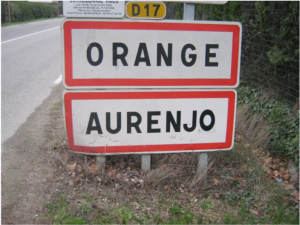
Should you find yourself in Provence this summer, you might wonder why some villages have bilingual signs at the entrance. Your surprise would be forgiven, since you are unlikely to have heard anything but French in most places, and likely a lot of English as you approach the Mediterranean. But if you listen more closely, observe more closely, you might come across a world that is fast vanishing, but that is still present. You might stumble upon a concert in a language that you cannot identify, or wonder why some street names don’t sound French. You might even hear people speak Occitan—for this is what it is, a language also known as Provençal, one which many locals will refer to as “Patois” (a derogatory term in France to refer to anything other than French traditionally spoken in the country).

provençal
Bilingual sign (French, Provençal)

This sort of experience might happen to you in Provence, but not only. Across the European Union, several million people speak a language that is not the official language of the state they live in. Across Europe, there are language advocates who defend and promote the right to speak one’s language. This struggle for language rights also extends to Latin America, North America, Australia, and many other places. This, many scholars assert, is a consequence of globalization—a backlash against uniformity if you like. A way of being oneself, of finding meaning locally in a world that seems to be getting smaller. In my recent book, Revitalising Language in Provence: A Critical Approach, I argue otherwise. Those movements are not a reaction to globalization—they are, on the contrary, a way of taking part in this process, on the very terms defined by those who define what globalization is (and not on their own terms, as Leena Huss [2008, 133] asserts).

But let’s start from the beginning. This book focuses on Provence, home to what is perhaps the earliest language reclamation movement, or at least one of the earliest. Poets had already started writing texts in defense of Gascon, Provençal or Languedocien (all dialects of what most scholars of Romance linguistics view as Occitan) back in the 16th and 17th centuries. This is perhaps a consequence of an increasingly aggressive move to promote French in all administrative domains at the expense of Latin and Occitan, which had been in use for official usage for centuries in what is now Southern France. But it was after the French Revolution Terror government (after 1793) sought to eradicate the “patois” that a genuine interest was born in various parts of France, resulting in the south in a rediscovery of the poetry of Medieval Troubadours and in a scholarly interest in the history of Provence and Languedoc before their annexation to France. It wasn’t, however, before the 1850s that an organized language-based movement was formed, under the aegis of poets such as Frederic Mistral or Joseph Roumanille.

The Felibrige was the name they gave to their movement, a name whose origin remains mysterious. The Felibres sought to revive the Provençal or Occitan language (which was still almost universally spoken in all of Southern France) through poetry and literature. And indeed, Mistral published a series of long, epic poems that were hailed across Europe as monuments of literature. Mirèio is probably his most well known poem, a love story set in the Crau region of Provence and an allegory of the language revival movement. Mirèio was acclaimed in Paris as a chef d’æuvre, and was prefaced by Lamartine.

I recount parts of the history of the movement in the book but for this blog post, suffice it to say that while successful on a literary level, it never succeeded in political terms. Provençal was long banned in education, and despite a strong Occitan movement throughout the 20th century, the use of Provençal continued (and continues) to decline. But the story I tell in this book isn’t the story of the language movement. Instead, following a two-year ethnographic study in Provence, I ask why the movement was based on language at all, like so many others afterwards—but, crucially, none before, or at least none before the 1840s.  Continue reading “What is language revitalization about? Some insights from Provence”

AGM & The President’s Lecture: Standards, norms and prescriptivism

The Annual General Meeting of the Philological Society was held on 17 June at Selwyn College, Cambridge.

Having completed a four-year term of office, Prof. Wendy Ayres-Bennett stood down as President of the Society; she is succeeded by Prof. Aditi Lahiri FBA.

The following Members of Council have served their term on council or wished to retire early, and did not stand for re-election: Prof. Ruth Kempson FBA (KCL); Prof. Aditi Lahiri FBA (Oxford); Dr John Penney (Oxford); Dr George Walkden (Manchester).

In their place, the following new Ordinary Members of Council have been elected: Prof. Eleanor Dickey (Reading); Dr Mary MacRobert (Oxford); Prof. Maj-Britt Mosegaard-Hansen (Manchester); Dr David Willis (Cambridge).

The 9th RH Robins Prize was awarded to Jade Jørgen Sandstedt (Edinburgh) for a paper entitled ‘Transparency and blocking in Old Norwegian height harmony’, which will be published in TPS.

The outgoing President delivered her President’s Lecture on ‘Standards, norms and prescriptivism’, an audio recording and screencast of which can be found below and on the Society’s YouTube channel.

The Faces of PhilSoc: Melanie Green

melanie_green

Name: Melanie Green

Position: Reader in Linguistics and English Language

Institution: University of Sussex

Role in PhilSoc: Council Member


About You

How did you become a linguist – was there a decisive event, or was it a gradual development?

Somewhere between doing my A-levels (in English, French and Latin) and applying for university, when I found the SOAS prospectus in the school cupboard. At that point I realised that studying language didn’t have to mean studying literature, and I applied to study Hausa at SOAS. In my final year, I took a course that focused on the linguistic description of Hausa (taught by Professor Philip Jaggar), and it was this course that led me upstairs to the Linguistics Department, where I then took my MA and PhD.

What was the topic of your doctoral thesis? Do you still believe in your conclusions?

My doctoral thesis was on focus and copular constructions in Hausa, and offered a minimalist analysis. I still believe in the descriptive conclusions, which relate to the grammaticalisation of non-verbal copula into focus marker, but I’m less convinced these days by formal theory. I still enjoy teaching it though, because I think it makes students think carefully (and critically) about formal similarities and differences between languages.

On what project / topic are you currently working?

Together with Gabriel Ozon at Sheffield and Miriam Ayafor at Yaounde I, I’ve just completed a BA/Leverhulme funded project to build a pilot spoken corpus of Cameroon Pidgin English. Based on this corpus, Miriam and I co-authored a descriptive grammar of the variety, which is in press.

What directions in the future do you see your research taking?

In my dreams, typologically-framed language documentation. In reality, probably more corpus linguistics, since this seems to be what attracts funding at the moment.

How did you get involved with the Philological Society?

The PhilSoc published my first book, Focus in Hausa.


‘Personal’ Questions

Do you have a favourite language – and if so, why?

No.

Minimalism or LFG?

Minimalism.

Teaching or Research?

Both.

Do you have a linguistic pet peeve?

No.


Looking to the Future

Is there something that you would like to change in academia / HE?

I would like there to be more funding for language documentation. Languages are dying faster than we can describe them.

(How) Do you manage to have a reasonable work-life balance?

I do, but that only became possible in mid-career. I achieve it with careful planning, so when I’m off work, I’m really off work.

What is your prime tip for younger colleagues?

Start publishing as early as possible.