Written by Cosima Hapke (Trinity College Dublin)
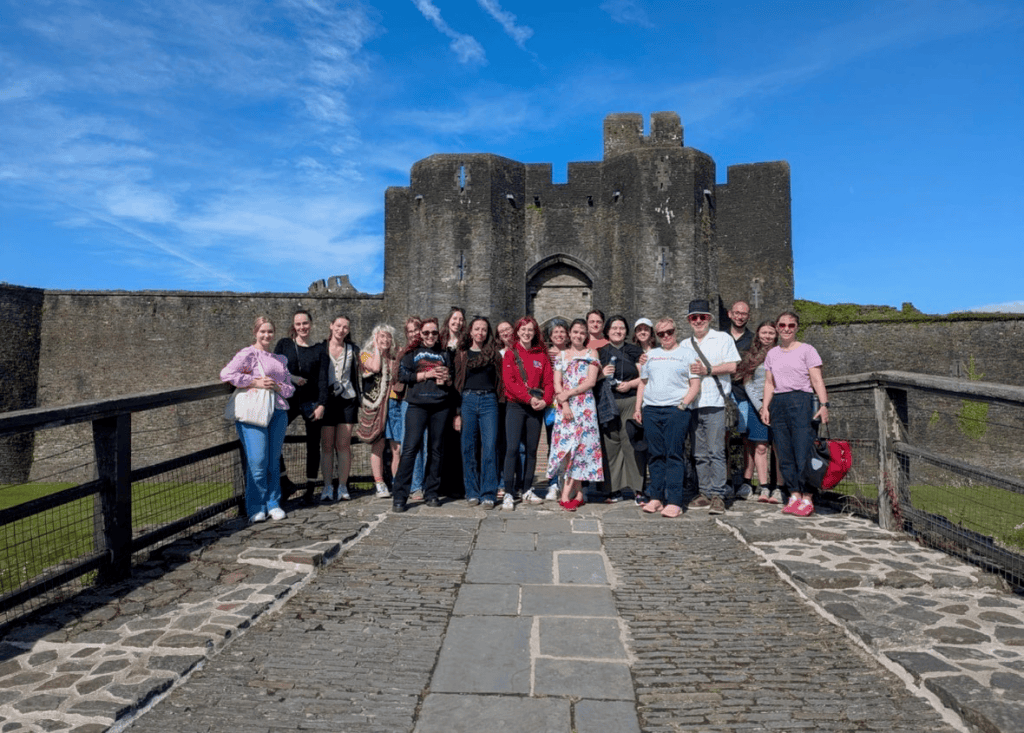
With great thanks to the Philological Society, the Summer School on the History of English (SSHOE) could take place from the 29th of June to the 3rd of July at the University of Cardiff this year. It was kindly hosted by Sara Pons-Sanz and gave students interested in the history of the English language an opportunity to delve deeper into this fascinating topic.
The programme started at lunchtime on Monday to allow students who had travelled from further away to join the first class with the others. Students came to SSHOE from the UK, Germany, Switzerland, Ireland, Slovenia, Norway and the Czech Republic. We first received a warm welcome from Sara and got a brief overview of the history of the English language, before diving into an introduction to reading Old English and Middle English in the afternoon. Experts from all over Europe had come to Cardiff to share their knowledge with students at SSHOE, and the sessions ranged from learning how to work with historical lexicographic tools and analysing Old English morphosyntax, to the work with letters and handwriting from the nineteenth century, as well as palaeography and abbreviations, pronouns of address, the standardisation of English spelling, learning basic statistics for linguists, how to work with historical corpora, and even Medieval English and its contact with French, and an introduction to Medieval Welsh and Anglo-Welsh.
Additionally to the sessions, we also had the privilege to get to know the city of Cardiff and discover more about Wales. On Tuesday evening, we went on a guided tour of Cardiff together, where we did not just learn about the history of the city and the country, but also more about the Welsh language. On Thursday, we got the chance to see one of the many famous castles in Wales. Caerphilly Castle, located only a short distance from Cardiff by train, is a beautiful medieval castle and we were given a special introduction to its history before getting to explore its grounds.
Not only did SSHOE offer us an in-depth look into many compelling aspects of the English language and its history, but it also fostered building a network of likeminded people. The shared lunches, coffee breaks and the dinner on Wednesday encouraged conversations between students and staff. It was specifically emphasised during the feedback round at the end that reaching out to the lecturers would be very welcome, which was greatly appreciated.
 The Philological Society Blog