Written by Mikayla Oliver
For over ten years, the Manchester Forum in Linguistics has brought PhD students and early career researchers from all over the world together to share their work and expertise. This year’s edition of the conference was held April 30th to the 1st of May. Thanks to the hard work of the committee and support from our funders, MFiL 2026 was a big success!
The evening before the conference, members of the committee and presenters met up to engage in some friendly competition! Our pub quiz was a great opportunity for everyone to get to know each other before the presentations kicked off the next day.
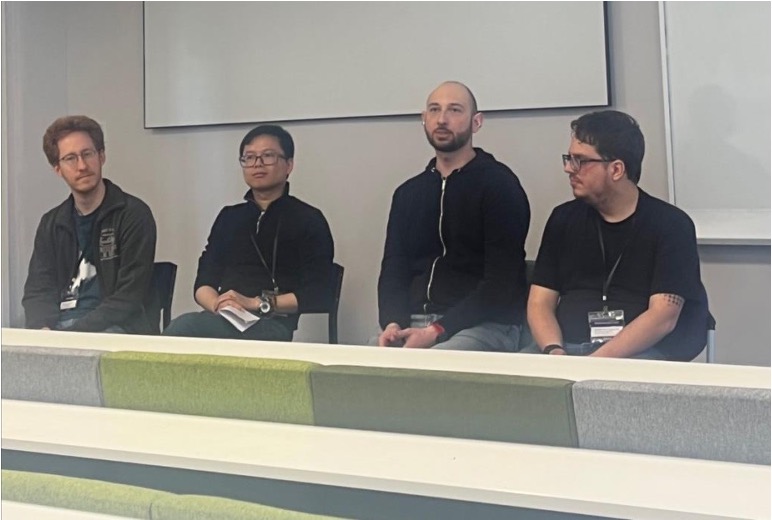
The conference began with a plenary talk by Dr Amy Booth titled ‘Plotting the course: Identity work and self-declaration in a dark web child sexual abuse forum.’ Following this, we held three parallel sessions which covered morphosyntax, psycholinguistics, and semantics across genres respectively. Before lunch, everyone gathered for our careers panel, where we had the chance to learn from the insights of some of our plenary speakers and the host of our research workshop. Each speaker very graciously detailed their journey to their current role and gave honest advice on navigating the job market to those in the audience.
These talks inspired many great questions and discussions which continued into lunch on day one. Already we could see the benefits of gathering linguists from such a wide array of backgrounds! Even though many of the attendees came from different institutions, and often different countries, their shared experiences with research and academia brought everyone together!
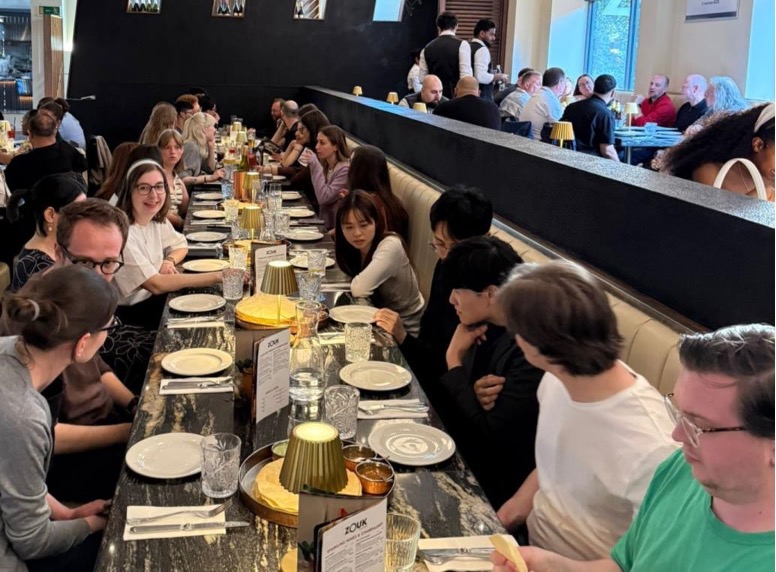
From lunch, we headed over to our first workshop of the conference where Dr Stefano Coretta taught us about ‘Open research practices.’ This was the perfect transition into our poster session, which included seven posters that dealt witha range of topics and research methods. We ended the day of presentations with Dr Simon Stein’s plenary talk ‘Effects of indexicality and iconicity on language attitudes,’ before all meeting for more exciting conversation over a lovely dinner.
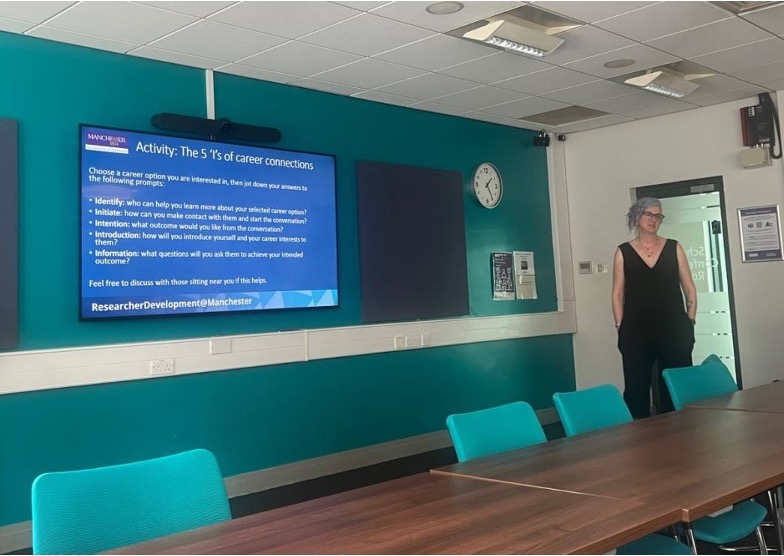
The second day of the conference began with our third plenary talk. Dr Lawrence Lam presented his talk ‘Controlling overt subject in Cantonese and Mandarin: Where theory meets experiment and grammar engineering.’ We then held our second set of parallel sessions, which focused on semantics, morphosyntax, and forensic linguistics. Before ourfinal set of parallel sessions, we held our second workshop, which built on some of the discussions we had in the careers panel the day before. Dr. Sarah Ashworth from Career Services at the University of Manchester delivered an engaging careers workshop which involved advice on career planning, networking, as well as some fun interactiveactivities that allowed attendees to interact and discuss what they had learned. The final parallel sessions then involvedpresentations on phonetics & phonology, language acquisition, and communication across modalities. Last, but certainly not least, our final plenary speaker Dr Max Canzi presented on ‘Pupilometry for the study of language (and beyond).’
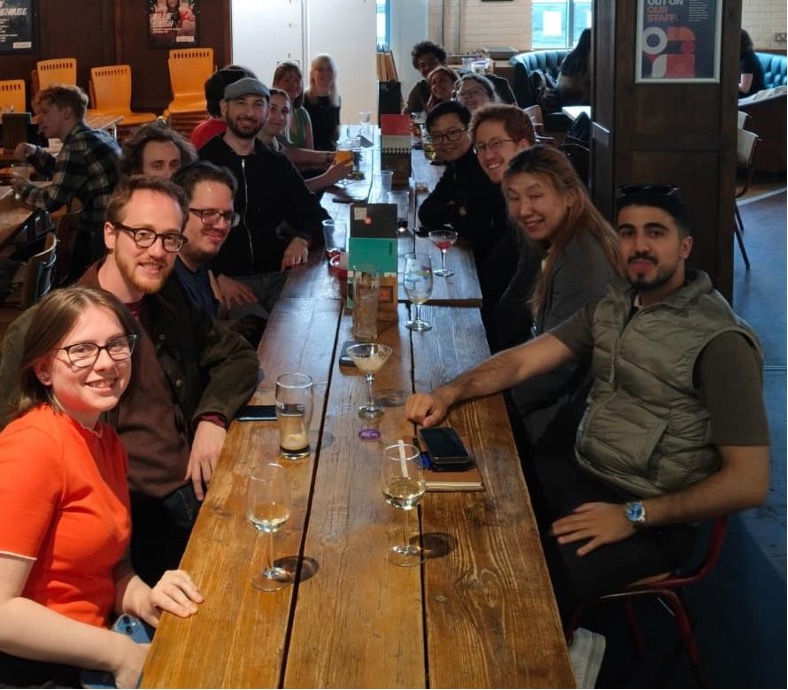
Thanks to continued support from the Languages Editorial Office, we were able to end the conference by presentingawards for the best and runner-up poster from the poster session. A huge congratulations to Laura Patrizzi and Mari K.Wilhelmsen for their amazing work! Following the official closing remarks, attendees gathered to celebrate a wonderful conference at the pub!
We are grateful to all the attendees for their hard work, as well as the Northwest Consortium Doctoral TrainingPartnership, the Linguistics and English Language department and ArtsMethods at the University of Manchester, andthe Philological Society for funding the conference. None of the above would be possible without you!