TPS 114(3) – Abstract 1

London’s Name

by Theodora Bynon

The present paper was inspired by Richard Coates’s 1998 article ‘A new analysis of the name London’, in which he refutes the traditional derivation of the name from the form Londinium recorded in the Classical sources on the grounds that its Old English ancestor Lunden presupposes a British (that is to say, Celtic) source form *[Lōndonjon] with a back vowel in the second syllable. I wish further to clarify the history of this name in two respects by showing that: (i) the British name must have reached western Germanic dialects prior to West Germanic Consonant Lengthening and thus in all probability prior to the Anglo-Saxon settlements in England, and: (ii) that *Londonion (with a short [o]) belongs to an identifiable British place-name type, even though the identity of the lexical base lond- remains rather elusive and information on a native settlement is confined to a single historical source, which locates it to the south of the Thames.

Sources of evidence for linguistic analysis

Round table discussion with Aaron Ecay (Unversity of York), Seth Mehl (University of Sheffield), Nick Zair (Univeristy of Cambridge), chaired by Cécile De Cat (University of Leeds)

Is linguistics an empirical science? How reliable are the data on which linguistic analyses and theories are based? These questions are not new, but in light of the disturbing findings of the Reproducibility Project in psychological sciences, the need to revisit them has become more pressing.  This round table discussion will start with presentations from three postdoctoral researchers, who will discuss the question of data collection and analysis and the interpretation of linguistic evidence.


This panel will be held on 11 November 2016 at 4.15pm in the Great Woodhouse Room, University House, University of Leeds, LS2 9JS.

For more information about the individual panelists’ presentations, see their abstracts below. The presentations have been live-tweeted under the hashtag , and George Walkden has kindly provided a storified version of the tweets. Continue reading “Sources of evidence for linguistic analysis”

Multilingualism: Empowering Individuals, Transforming Societies (MEITS) – Project Launch

by Lisa-Maria Mueller (University of Cambridge)

Languages are not merely a tool for communication but central to key issues of our time, including national security, diplomacy and conflict resolution, community and social cohesion, migration and identity. Learning languages then is not only about learning the words and grammar of another language but also about a deeper intercultural understanding that is not just important for individuals but for developing more respectful and effective policy.

And yet multilingualism and multiculturalism are commonly problematised and Modern Foreign Languages have not yet attained the same status as English, Maths or Science in the school setting.

The AHRC funded Open World Research Initiative (OWRI), which subsumes four major projects, therefore aims to explore and promote modern languages in the UK (see here for more details).

MEITS is one of those four research programmes. It is based at the universities of Cambridge, Edinburgh, Nottingham and Queen’s Belfast and spans six interlocking strands exploring the fields of literature, cinema and culture, history of ideas, sociolinguistics, education, applied linguistics and cognition (see diagram).

meits_diagram

Together, these strands seek to answer the following research questions:

  • What is the relationship between the multilingual individual and the multilingual society?
  • What are the opportunities and challenges presented by multilingualism?
  • What is the relationship between multilingualism, diversity and identity?
  • What is the relationship between multilingualism and language learning?
  • How can we influence attitudes towards multilingualism?
  • How can we re-energise Modern Languages research?

To this end, research strand 1 will be investigating literature, cinema, culture and citizenship in a globalising Europe by studying cultural texts and events – narrative, fiction, poetry, theatre, cinema – that foreground, problematise, and inform questions of linguistic unity, diversity, identity, power, and quality of life in the public sphere. This strand will focus on two distinct contexts at opposite ends of Europe; Catalonia, on the one hand, because of its status as an ‘autonomous region’ in Spain and Ukraine, on the other, due to its recent conflicts over the legacy of empire and colonialism. Despite inherent differences, these regions share the instrumentalisation of language for the renegotiation or secession of national identities. Spanning from the 19th to the 21st century, strand 1 of the MEITS project will investigate how and why language is politicised in multilingual contexts and the role of culture in this process by undertaking formal-aesthetic and symbolic-ideological analyses of texts and contexts.

Strand 2 also focuses on societal multilingualism and will provide a comparative perspective of standard languages, norms and variation in multilingual contexts. The role of multilingualism in relation to standard languages will be analysed synchronically and diachronically in national and transnational contexts (e.g.: France/Francophonie) alongside pluricentric (e.g.: German) situations where languages vie with other languages/varieties on cultural, political and ideological grounds (e.g.: Ukrainian, Irish, Mandarin) by combining methods from the humanities, sociolinguistics and historical sociolinguistics.

The question of identity is central to many of the projects and will be explored from an individual and a social perspective in the third strand of the MEITS project. The contexts of Ireland and France will be contrasted as the first has an official language that is both minoritised and dialectal while the latter has a single standard language that is highly standardised and dominant despite the richness of regional and heritage languages in France. Quantitative and qualitative approaches will be blended to investigate issues such as urban language in multicultural contexts, regional identities, as well as the role of language for social cohesion.

Multilingual identity is further investigated in strand 4 of the MEITS project, where its connection to motivation and attainment in foreign language learning will be studied. To this end, the development and expansion of multilingual identities in early foreign language learning among monolingual adolescent learners and their peers with English as an additional language will be charted. The cognitive and social dimensions of motivation will be studied in intervention and matched non-intervention classes using a mixed methods design.

Instructed foreign language learning is also the focus in strand 5 of the MEITS project where the influence of age, language-specific factors and setting on the language learning process and progress will be studied. The aim of this strand is to investigate whether an earlier start indeed is better in the context of minimal input settings or whether cognitive changes during adolescence might actually make young adults more successful language learners. In order to achieve this goal, a combination of linguistic and cognitive tests will be employed to assess the language learning process and attainment in learners of different starting ages in a longitudinal study.

Finally, strand 6 shares its interest in cognitive processes with strands 4 and 5 and will study the impact of multilingualism on motivation, health and well-being. This topic will be approached from two perspectives. On the one hand, the cognitive effects of intensive language learning in late adulthood will be studied and on the other, bilingual and monolingual children with autism will be compared in order to establish whether cognitive advantages associated with typically developing bilingualism can also be found in bilingual children with autism.

This brief overview of the MEITS project shows that the six research strands are closely intertwined, facilitating the development of new interdisciplinary research paradigms and methods which will allow for a more holistic approach to the study of multilingualism on a societal and individual level. Through this integrated approach and our close collaboration with partners from outside higher education we aim to change attitudes towards multilingualism and highlight its benefits for cultural awareness, health and well-being, education, social cohesion, (inter)national relations as well as employability and thus empower individuals and transform societies.

If you want to learn more, visit the project’s website and/or follow us on social media (on facebook, twitter: @meits_owri).


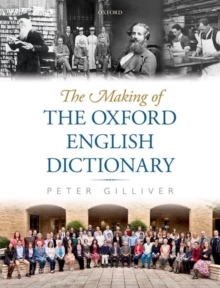
The Making of the Oxford English Dictionary

by Peter Gilliver (Associate Editor, Oxford English Dictionary)

The origins of the Oxford English Dictionary, and indeed its fortunes for much of the period when its first edition was compiled, were so closely bound up with the Philological Society that it is hardly surprising that it was long known in some quarters as ‘the Society’s Dictionary’. Accordingly, the Society’s members may be interested to know something about the new history of the project which has just been published by Oxford University Press.

9780199283620

It has been many years in the making. In the late 1990s, about a decade after I took up a position as a member of the Dictionary’s current editorial staff, I began to contemplate the idea of compiling a new history of it. Many will be familiar with some of the other histories of the OED that were already available at that time, or have appeared since: Caught in the Web of Words for example, Elisabeth Murray’s magisterial biography of her grandfather James Murray (which inevitably only manages to tell his story by also telling the story of the work with which his prodigious energies and intellect were taken up for over half his life), or Simon Winchester’s The Meaning of Everything. However, I thought that my own knowledge of the Dictionary, gained through years of constant engagement with its text as a practising lexicographer, might qualify me to take a fresh look at the subject. Moreover, I had already begun to explore the Dictionary’s archives, having become interested in the lexicographical work done by J. R. R. Tolkien as one of my predecessors on the staff (and given a conference paper on the subject in 1992), and I could see that there was a great deal more to be discovered.

I decided that there might be advantages in combining the task of researching and writing the history of the OED with my ‘day job’ as one of the team of lexicographers engaged in preparing the Dictionary’s third edition. Working on the two tasks concurrently has indeed been beneficial to both—the cross-fertilization between ‘doing lexicography’and writing the history of one of its greatest projects has taken place in both directions—but it has also had the disadvantage that it took me fourteen years to complete the book.

james-murray
James Murray in the Scriptorium

It gives me great pleasure to take this opportunity to acknowledge, as I already have done in the preface to the book, the generosity of the Council of the Philological Society in allowing me to consult the Society’s records; many of these records are currently deposited in the archives of Oxford University Press, making it easy to consult them at the same time as the OED‘s own enormous archive. In particular, the minute books for the Society’s meetings—both ordinary meetings, and meetings of the Council—from the earliest years of work on the Dictionary have greatly enriched the story, with fascinating detail about such matters as the protracted behind-the-scenes manoeuvring with key figures in the Society that preceded the eventual signing of contracts with OUP in 1879, and the thorough briefings about the project’s progress during the ensuing decades, which Society members received (usually directly from one or other of the Dictionary’s Editors) at regular ‘Dictionary Evenings’—privileged information, which the Society was often the first to hear, and which in some cases never got written down anywhere else.

The history of the OED has an intrinsic interest to anyone interested in linguistic scholarship, the history of English, and British cultural history more generally; I hope that the Society’s close association with the Dictionary will give further interest to my book for Society members. They certainly have good reason to be proud of the part played by the Society, and by many of its individual members, in the inception and compilation of the Dictionary, arguably one of the greatest philological projects ever undertaken.

‘The Making of the Oxford English Dictionary’ is published by Oxford University Press (ISBN 9780199283620).

Saussure vindicated

by George Walkden (University of Manchester)

A new paper in the journal PNAS provides the most striking and robust empirical support ever found for Ferdinand de Saussure’s notion of the arbitrariness of the linguistic sign.

That’s not how the authors (henceforth Blasi et al. 2016) interpret it. Nor is it how it’s been reported in the many media outlets that have seized on it. For example, writing for the Guardian, David Shariatmadari describes their findings as the hidden sound patterns that could overturn years of linguistic theory. (The issue of why linguistics papers published in “science” journals get so much press while the same paper published in Diachronica or our own Transactions would be largely ignored is a topic for another blog post.) The authors, for their part, state that “These striking similarities call for a reexamination of the fundamental assumption of the arbitrariness of the sign”. ABC News goes even further: “The breakthrough finding disproves one of the most fundamental concepts in linguistics — the idea that the relationship between the sound of a word and its meaning is unrelated”.

To see why these are probably overstatements, let’s go back to the source. Continue reading “Saussure vindicated”

‘Is that your coat on the floor?’ – Agency and autonomy in indirection

by Rebecca Clift (University of Essex)

Why might a parent say to a child ‘Is that your coat on the floor?’ as a means of getting them to pick it up, rather than using a directive, ‘Pick up your coat’?

Work on indirect utterances has focused exclusively on what the speaker is assumed to gain from indirectness. In contrast, this talk uses insights and data—both audio- and video-recorded—from Conversation Analysis (CA) to illuminate observable recipient conduct as a means of identifying the interactional motivations for a speaker to be indirect. Central to the analysis is the observation that recipients do work of various kinds to exert agency in response; to establish that what they are doing has a degree of autonomy, rather than being purely acquiescent in response to a prior turn. It turns out that linguistic mechanisms deployed in the pursuit of autonomy figure centrally in this empirically-grounded account of indirectness.

A video recording of the talk can be found below.

This paper was read at the Philological Society meeting in London (Senate House, University of London, Malet St, London WC1E 7HU, room G21A) on Friday, 14 October, 4.15pm.

Before we go live: an update

It has been just over a month since we announced that the Philological Society Blog would go live in mid-October, to coincide with the first regular PhilSoc meeting of the academic year 2016/17. So far, the results are very encouraging!

Since the beginning of September, we have received more than a dozen offers to write blog posts from members at varying stages of their careers and from a variety of places: from master’s students to permanent postholders, working at the Universities of Cambridge, Manchester, Oxford, Reading, Sheffield, and Surrey.

Come October, members can expect interesting insights into new research projects, fieldwork reports, and outlines of doctoral research, next to general news from the Society such as abstracts of papers to be read at meetings and articles to appear in the Transactions.

In the meanwhile, we encourage all members to think about writing a blog post about their own research, projects, fieldwork, books, or recent/future conferences (whether organised or attended). As outlined in our new style guide, contributors have great freedom in their choice of topic and form – and we hope that they will use the opportunity to share their findings, thoughts, and questions with other linguists.

All members interested in writing a post are asked to get in touch via the contact form or by email to studentassoc {at} philsoc.org.uk .

Welcome to our blog!

Over the course of the last academic year, PhilSoc has decided to launch a blog for news, research reports, and announcements that will be of interest to members of the Society.

Beginning with the first regular meeting of the Philological Society in the academic year 2016/17 on 14 October, the blog will be updated on a regular basis (at least every 10 days) and will offer a variety of entries:

  • abstracts of papers to be read at PhilSoc meetings and of the papers to appear in TPS
  • reports on Outreach activities facilitated by the Society
  • summaries of members’ activities funded by the Society (conference travel, fieldwork, etc.)
  • news from Master’s Students on PhilSoc Bursaries
  • research reports from members of the Society

We strongly encourage PhilSoc members to use this blog as a platform to share their recent, current, and future research projects, elicit informal feedback on their ideas, and to advertise events and projects they are involved in.

Similarly, we hope that members at all stages of their career (doctoral, ECR, permanent postholders) will share their news, thoughts, and projects with the rest of the Society. These can take the form of short abstracts, longer outlines of projects, questions concerning a research area, calls for participants or contributors, opinion pieces concerning current linguistic topics, or announcements of larger research projects.

Members who have received a bursary or other funding from the Society in the past year are requested to compose a short report on their work or activities.

Every entry will be open to comments from the PhilSoc membership, which we hope will allow members to exchange opinions, links, and other resources with one another.

All members interested in contributing to the blog are invited to do so directly by following this guide. For any further questions or suggestions, feel free to comment on this entry, or to get in touch with the Secretary for Student Associates (Robin Meyer, studentassoc {at} philsoc.org.uk).

We look forward to your contributions!

TPS 114(2) – Abstract 4

The grammaticalisation of possessive person marking: a typological approach

by Marlou van Rijn (University of Amsterdam)

This study focuses on the grammaticalization of agreement markers from possessive pronouns, which has two different dimensions: loss of referentiality (function) and loss of morpho-phonological independence (form). I examine the referential potential and formal expression type of possessive person markers in a worldwide sample of 39 languages with an alienability distinction. Referential potential is measured independently of expression type by applying a new typology of person markers. First, I demonstrate that inalienable possessive marking is at least as referential and formally independent as alienable possessive marking, and often less referential and less independent. Unlike explanations in terms of frequency and iconicity, I argue that this asymmetry is essentially semantics-based: the presence of a possessive relationship is inherent to the meaning of the inalienable noun, which is therefore in less need of expressive marking than alienable nouns. Second, I show that loss of referentiality correlates with loss in form, but in a relative rather than an absolute sense: in individual languages, higher referential markers never show a greater degree of bonding with the possessee than lower referential markers. These results suggest that function and form evolve in the same direction, but need not evolve at the same pace.

Read it online