Report by Mzati Nkolokosa, PhD Student in Linguistics, University of Essex
Thanks to the generous support of the Philological Society Travel and Fieldwork Bursary, I presented at the University of Malawi 2025 School of Humanities and Social Sciences Conference, held in the country’s first capital city of Zomba on 7 and 8 August. The conference was held under the theme ‘Reimagining Sustainable Futures: Voices from the Global South’ and was attended by nearly 150 researchers, NGO leaders, artists and private sector captains.
The theme speaks to my PhD study which is on Cinyanja speakers’ mental health perspectives. The study is an investigation the conceptualisation of mental health among Cinyanja speakers in Malawi. The main goal is to bring ‘voices from the global south’ not only to the attention of the rest of the world but also to the Global South itself. The Global South needs to listen to its own voice and before requiring the rest of the world to listen to pay attention to the voice. The conference was, therefore, a significant opportunity for me to present Cinyanja speakers’ perspectives on mental health to the speakers of the language and others. This is the first study to investigate mental health from a linguistic perspective among Cinyanja speakers.
The conference had two objectives. The first was to highlight the critical contributions of the Humanities and Social Sciences in shaping our understanding of sustainability and informing pathways towards more equitable and resilient futures. The second objective was to enhance transdisciplinary dialogue and collaboration among scholars, researchers, policymakers and practitioners by examining the social and political practices related to sustainable futures.
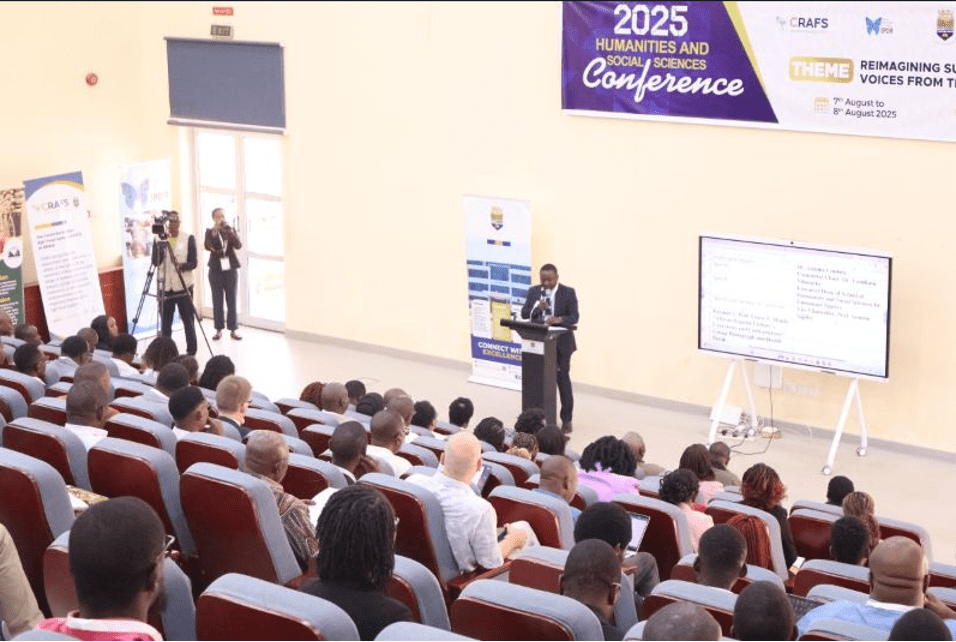
I presented two papers. The first paper was titled ‘Ubuntu or Umunthu?: Decolonising from Dominant Postcolonial Perspectives in the Global South’. The paper, which is the theoretical framework of my study, attempts to define Umunthufrom a Malawian Cinyanja speakers’ perspective and contrast it with South Africa’s Ubuntu perspective from IsiZulu speakers. The main difference is that Umunthu perceives the individual as central to the existence of the community while Ubuntu perceives the community as central to the existence of the individual. Secondly, Umunthu is about economic independence of the individual while Ubuntu is about communitarianism. My study argues that Umunthu is the way Cinyanja speakers conceptualise mental health. Secondly, the study argues for an awakening to dominant perspectives within the Global South itself. The second paper was titled ‘Maganizo: Cinyanja speakers’ way of conceptualising the stresses of life’. The paper investigates Umunthu-related language choices that Cinyanja speakers use to conceptualise and communicate mental problems. A key finding is that Umunthu communicates ‘mental health’ while maganizo is a concept that communicates the stresses of life that can lead to mental disorders. The findings of the study are significant because they bring to light the rich knowledge about mental health that Cinyanja speakers have stored in their language.

I chose to present at the conference for two reasons. The first is that the conference offered me the opportunity to present in my home country, which is supposed to be the primary beneficiary of the study. Engaging with researchers and scholars from the study setting provided feedback that is useful for the completion of my thesis. The second is that the conference was an opportunity to grow my network of researchers with shared interests. Indeed, I am happy to report that I met two South Africa based researchers with whom I had meetings and agreed to remain in contact as we think of collaboration in future.
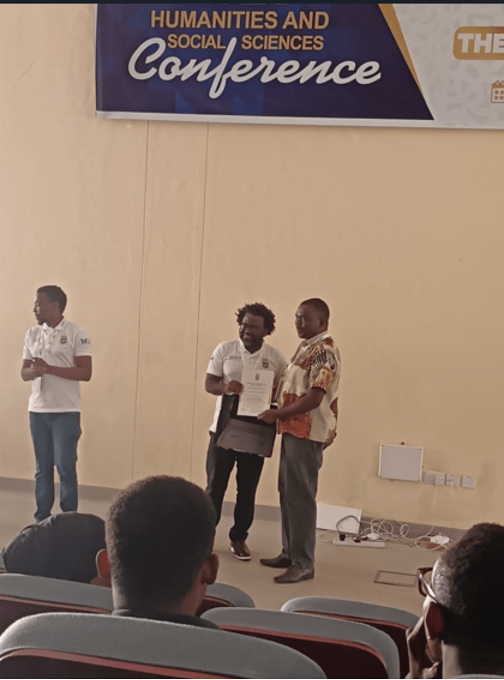
The following were two keynote speakers at the conference. Professor Grace A Musila who spoke on ‘African Popular Culture’s Currencies and Contradictions’ while on the second day, Dr Ronald Mangani spoke on ‘African Leadership and Sustainable Development’.
I would like to thank the Philological Society for its support of £1000 which I used to purchase a flight ticket to Malawi for which I am very grateful. I am also grateful to my supervisor, Professor Hannah Gibson, for her support when I was preparing for the conference.
 The Philological Society Blog