Written by Sophie Krol (UCL), a recipient of the Philological Society’s Master’s Bursary 2024-25
It is thanks to the Philological Society and their extremely generous Master’s bursary – and to my supervisors at Newcastle University who brought my attention to the bursary in the first place – that I find myself at the end of an enriching twelve months at UCL.
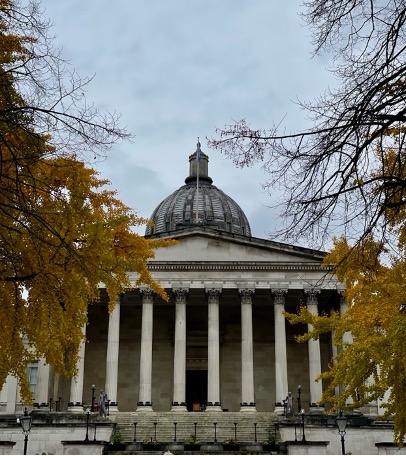
As a Linguistics undergraduate at Newcastle (2021-24), I became enthused by topics that hadn’t occurred to me before – from syntactic theories attempting to account for spoken and signed languages alike, to my extended study on relative-clause attachment ambiguity, to the questions of evolutionary linguistics – so much so that I didn’t feel I was done yet.
Spurred on to pursue further study, I came across UCL’s MSc in Language Sciences. Of its five specialisations, one intrigued me the most: sign languages and deaf studies. This was especially the case given its Deafness, Cognition and Language research centre (DCAL), the source of widely impactive research on British Sign Language (BSL) and deafness. Their research areas span neuroplasticity, cross-modal machine translation, and attitudes towards BSL’s significant regional variation, to mention a few.
This specialisation opened doors to learn directly of the rich and diverse deaf culture and community that stands on the shoulders of the likes of Francis Maginn and Helen Keller. In particular, this was made possible by the BSL Level 1 module led by Clive Mason, and the DCAL-specific Psychology and Language Sciences (PALS) modules.
For my Deafness, Cognition and Language module, I chose to present research on the learning of numeracy and mathematics, specifically the attainment gaps commonly observed between D/deaf and hearing peers. The research seemed to repeatedly lead back to one main factor: language deprivation. Devastatingly common in the deaf community – but importantly, avoidably – language deprivation happens when a child misses out on being exposed to a fully-accessible (often, signed) language during their early years. This can have profound, long-term effects that extend well beyond language itself.
My programme culminated in a research project within the Experimental Psychology division – specifically, a psycholinguistic investigation into lexical ambiguity. Broadly speaking, I aimed to inform the research base on factors capable of enhancing reading fluency and efficiency. 75 participants were semantically primed by reading sentences including words that have multiple meanings (homonyms). Crucially, contextual information disambiguated these words towards their less common meanings – take the bird-related meanings of swallow or crane as examples. I manipulated whether this disambiguating context varied or whether it was identical for each exposure of the given homonym.
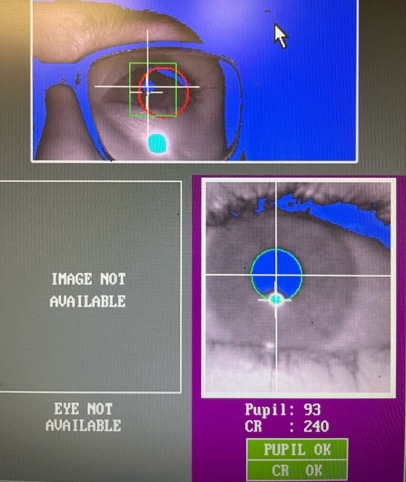
To allow me to examine whether repetitive or variable priming better facilitated readers in accessing infrequent meanings, I used the eye-tracking method. I found that, when previous exposure to a word meaning had occurred in variable contexts, the appropriate meaning would be more likely to be accessed faster (as assumed from faster reading times) upon a next encounter.
Having gained so much from my time here at UCL, I am immensely grateful for the PhilSoc’s Master’s bursary, as well as those that supported me in applying for both the bursary and the course itself.
 The Philological Society Blog